

PROLOGUE: EPHEMERALITY
OCTOBER 2025
PROLOGUE: EPHEMERALITY
x

10 OCTOBER 2025
FASHION EXHIBITION
IN DEDICATION
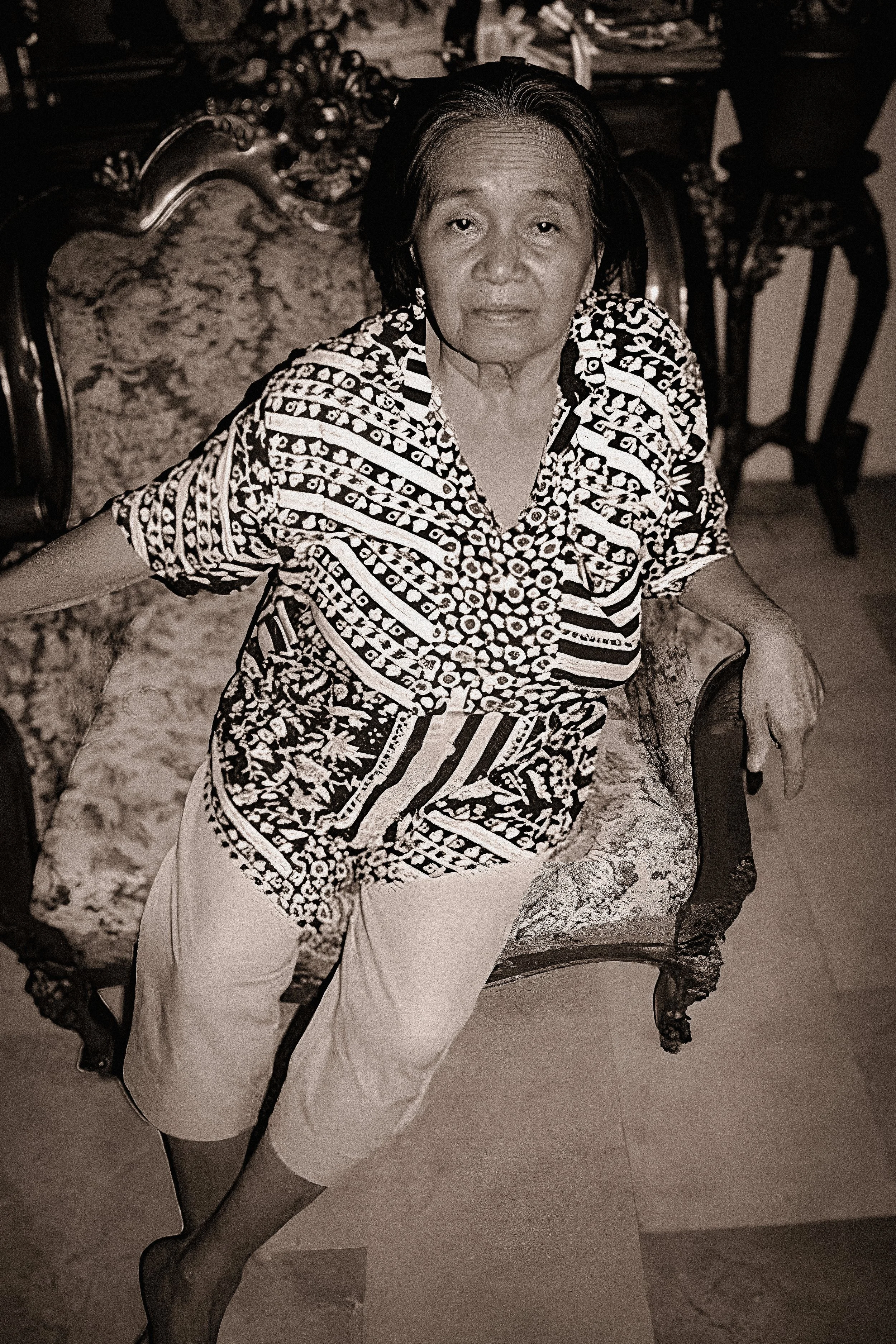
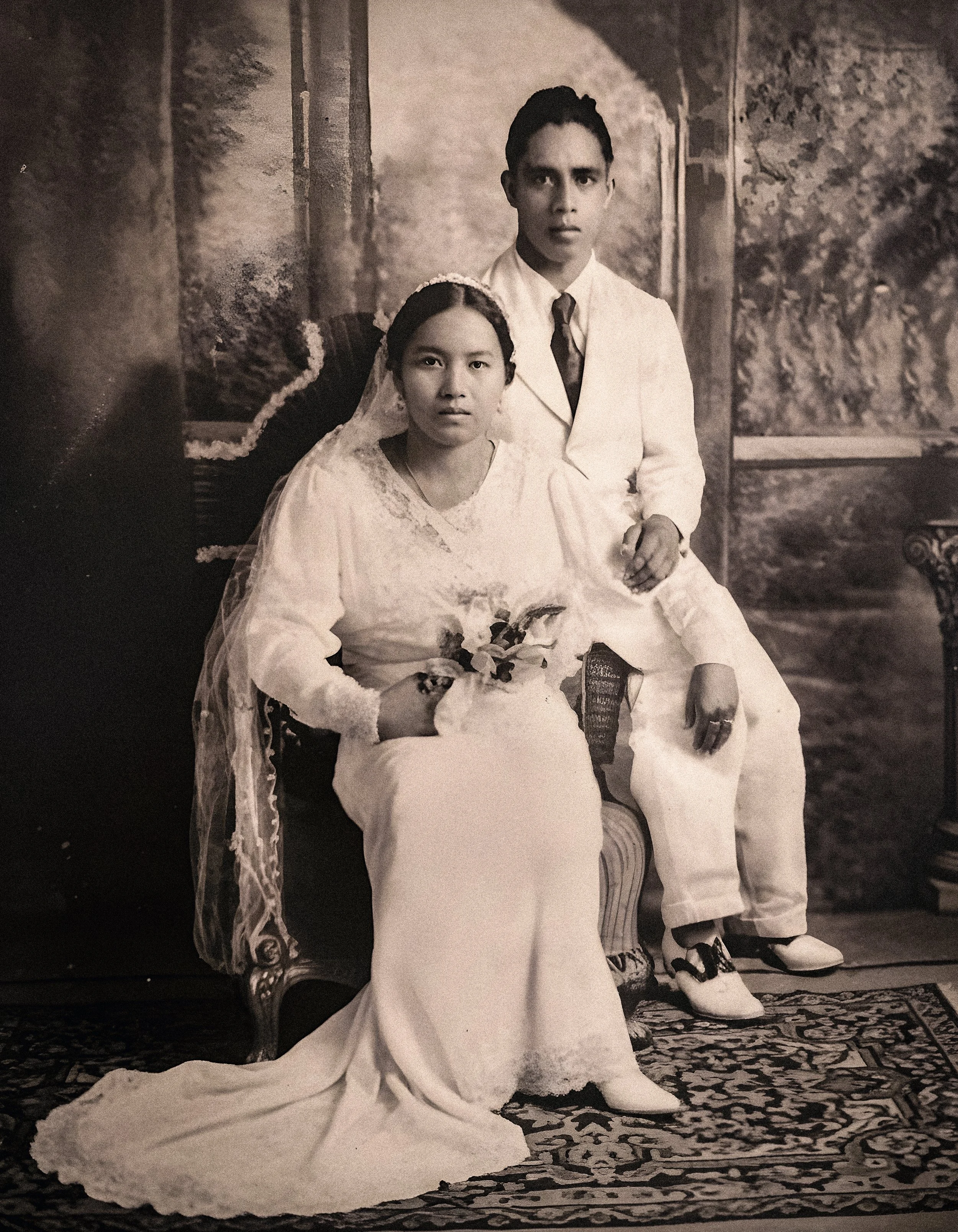
To my mother Minda, my grandmother Ligaya, my great-grandmother Braulia, all the women who raised me and all those who came before them.
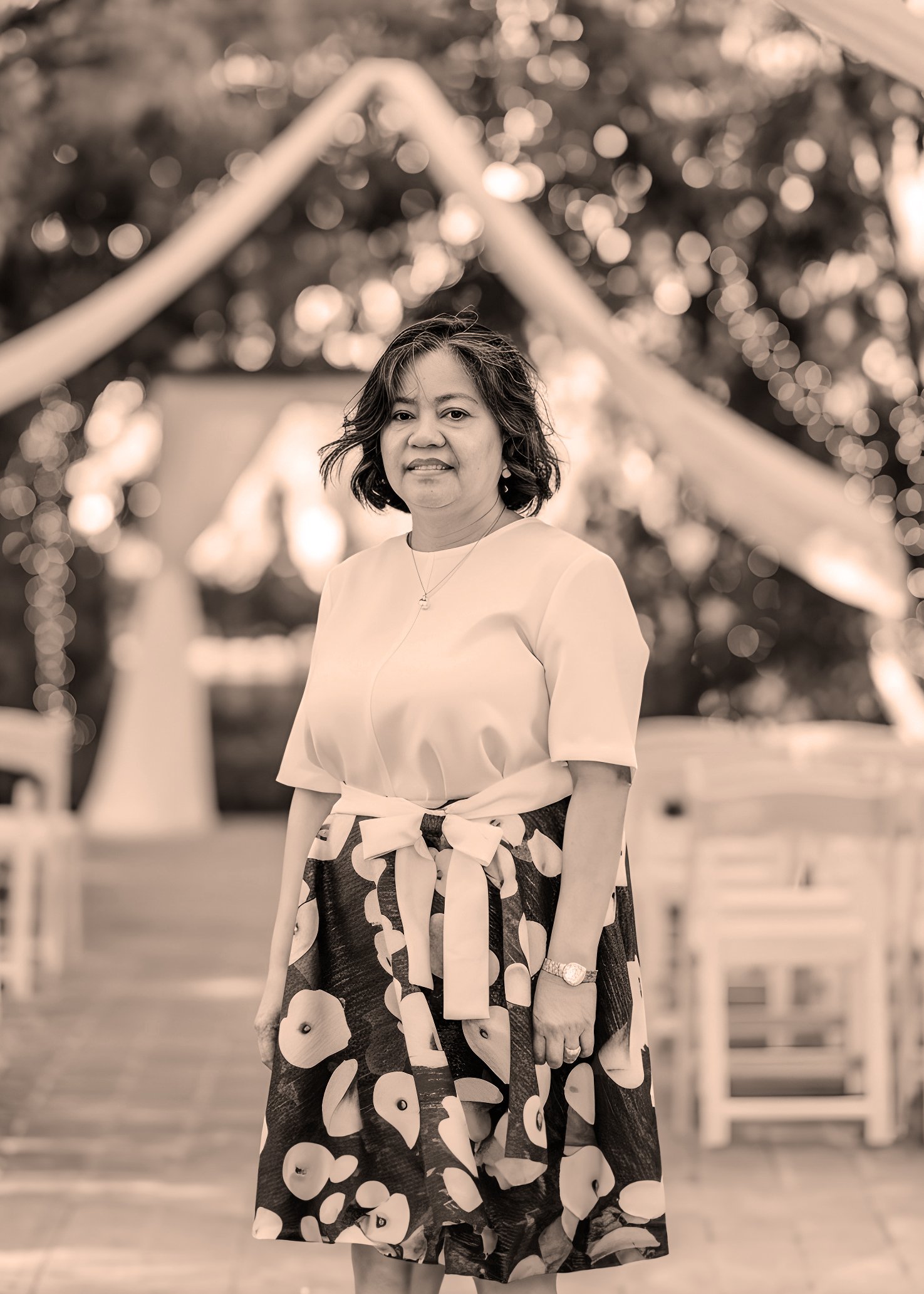
DEPTH OF FIELDS
LUIS CABALQUINTO
I walk some hundred paces from the old house
where I was raised, where many are absent now,
and the ricefields sweep into view: here where
during home leaves I'm drawn to watch on evenings
such as this, when the moon is fat and much given
to the free spending of its rich cache of light
which transmutes all things: it changes me now, like
someone restored to the newness of his life.
Note the wind's shuffle in the crown of tall coconut
trees; the broad patches of moon-flecked water ―
freshly-sowed with seedlings; the grass huts of
croppers, windows framed by the flicker of kerosene
lamps: an unearthly calm pervades all that is seen.
Beauty unreserved holds down a country's suffering.
Disclosed in this high-pitched hour: a long-held
secret displaced by ambition and need, a country
boy's pained enchantment with his hometown lands
that remains intact in a lifetime of wanderings.
As I looked again, embraced by depths of an old
loneliness, I'm permanently returned to this world,
to the meanings it has saved for me. If I die now,
in the grasp of childhood fields, I'll miss nothing.
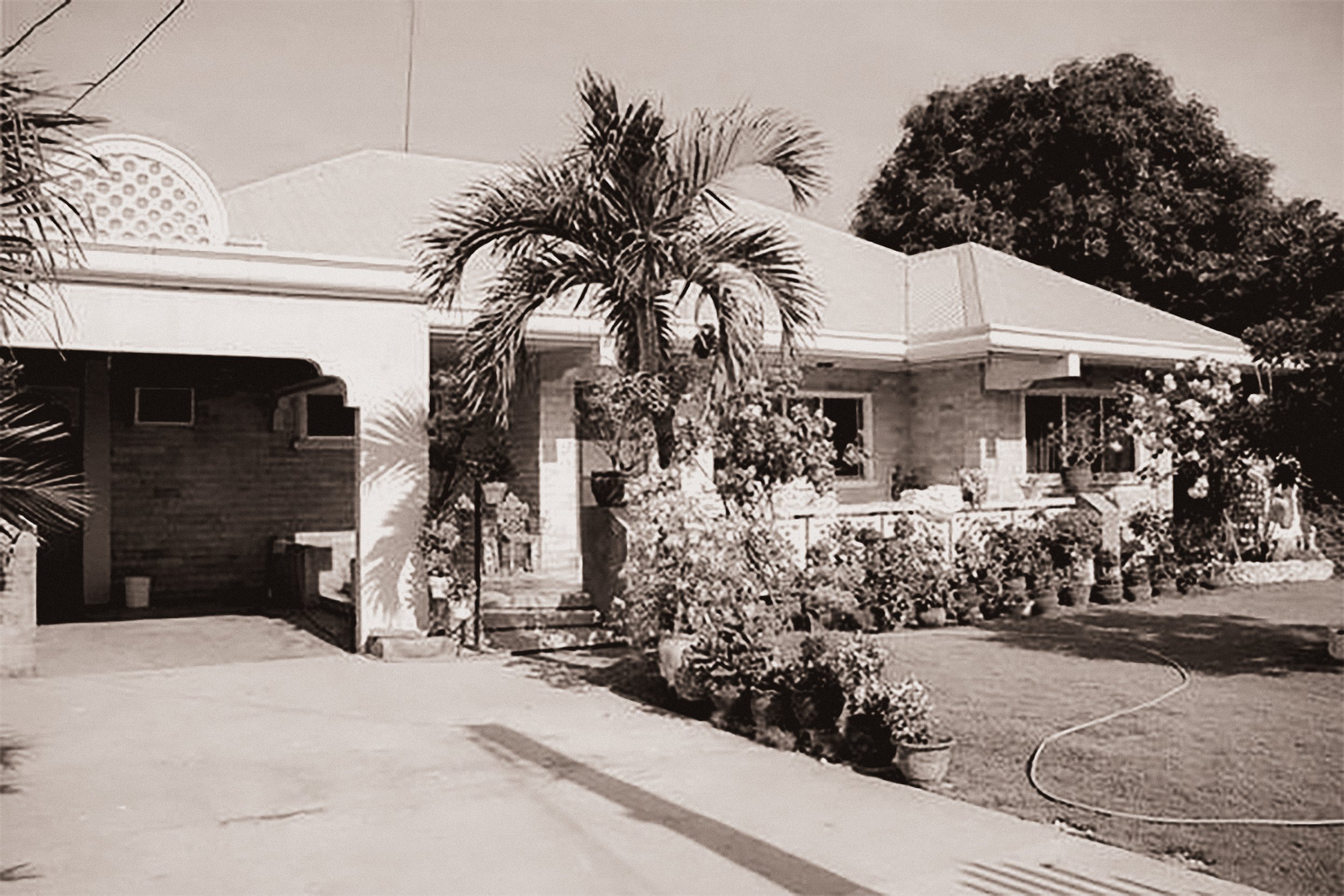
STO. TOMAS, LUBAO, PAMPANGA
HOME
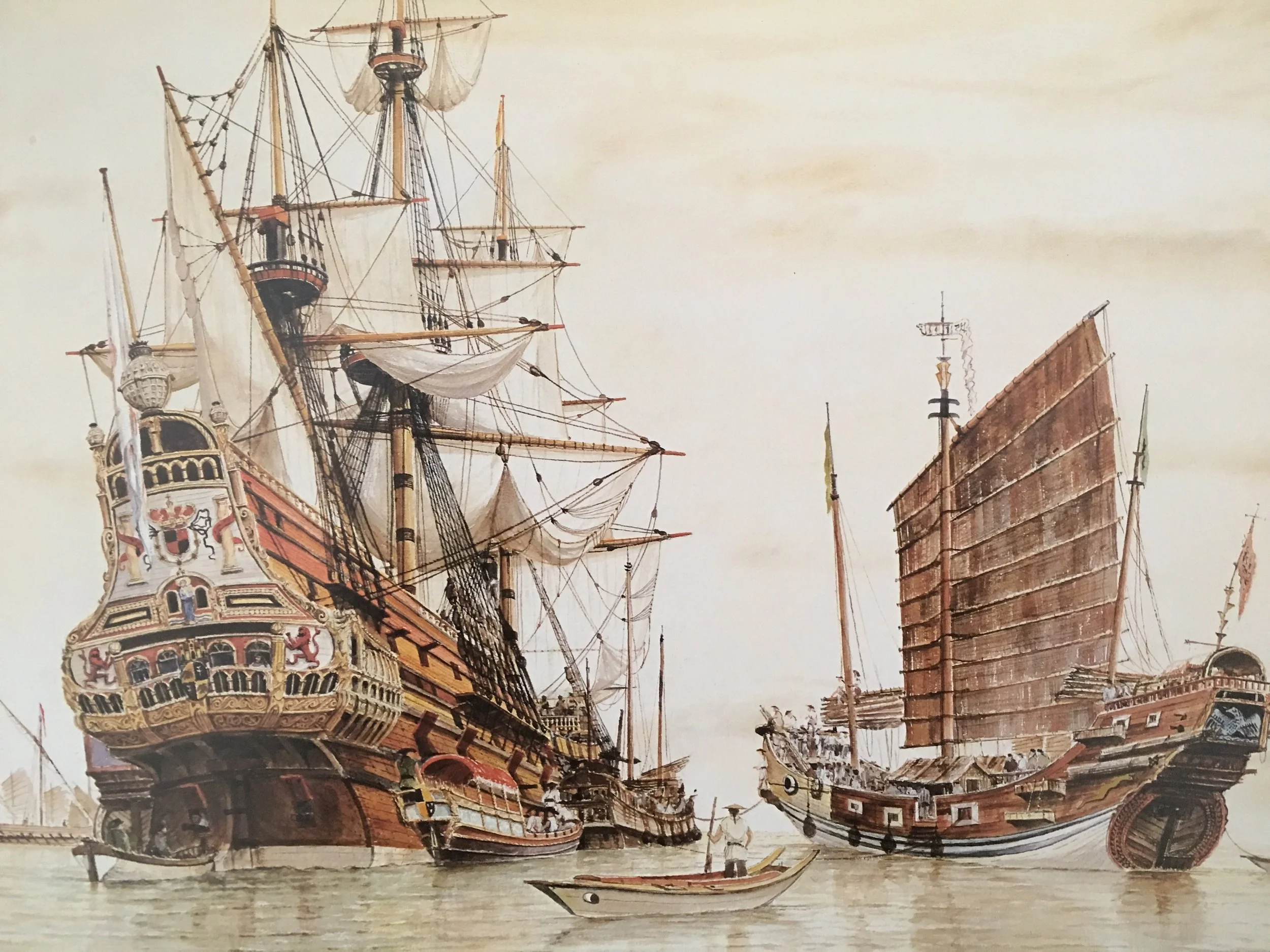
STO. CRISTO DE BURGO OF THE MANILA-ACAPULCO TRADE GALLEON, 1693
WE HAVE ALWAYS BEEN HERE
For over four centuries, Filipino Americans have been threading their stories into the American cultural fabric.
Now, our voices are rising like never before. Our Portland story begins in 1693 as told by oral histories of the Nehalem-Tillamook and Clatsop peoples, when Filipino sailors aboard the Santo Cristo de Burgos were shipwrecked on the Oregon shores near Nehalem Spit.
Through waves of immigration and decades of community building, we've grown from six founding families forming the Filipino American Association of Portland and Vicinity in 1959, to the 7,000 some Filipinos in 1997—many arriving as students who took whatever work they could find.
Today, our community has blossomed into a vibrant community of 38,500 in the metro area. Nationally, we are 4.4 million strong leading in healthcare, technology, education, and creative industries.
From food, to arts, media & entertainment, Filipinos in America are breaking through the cultural zeitgeist. We’re taking up space, making waves, shaking up the status quo, and shaping what it means to be Filipino in America today.
Both in Portland, Oregon and on the national scale, our people are growing in influence and visibility. We’re no longer passive participants in history, we're weaving it.
INTRODUCTION
There comes a moment in every life when the masks we've worn for so long become indistinguishable from our face. When the person we've become to survive feels nothing like the child we once were.
For this young man, that moment arrives quietly. He looks in the mirror and sees a stranger. Somewhere between childhood and now, between the Philippines and America, between who he was told to be and who he truly is, he lost the thread back to himself.
Overwhelmed by this realization, he falls into a deep, transformative slumber. Upon awakening, though it remains unclear whether he has returned to reality or entered a profound dream state, he encounters a mystical figure: a Babaylan, a traditional Filipino healer from the old stories. Without words, she communicates that she is there to reveal what he already knows, what he has always known but has been buried within him.
The Babaylan will guide him through the memories that shaped him, through the moments he's forgotten, back to the truth of who he has always been.

PROLOGUE: EPHEMERALITY


BURNING OF THE IDOLS
FERNANDO CUETO AMORSOLO
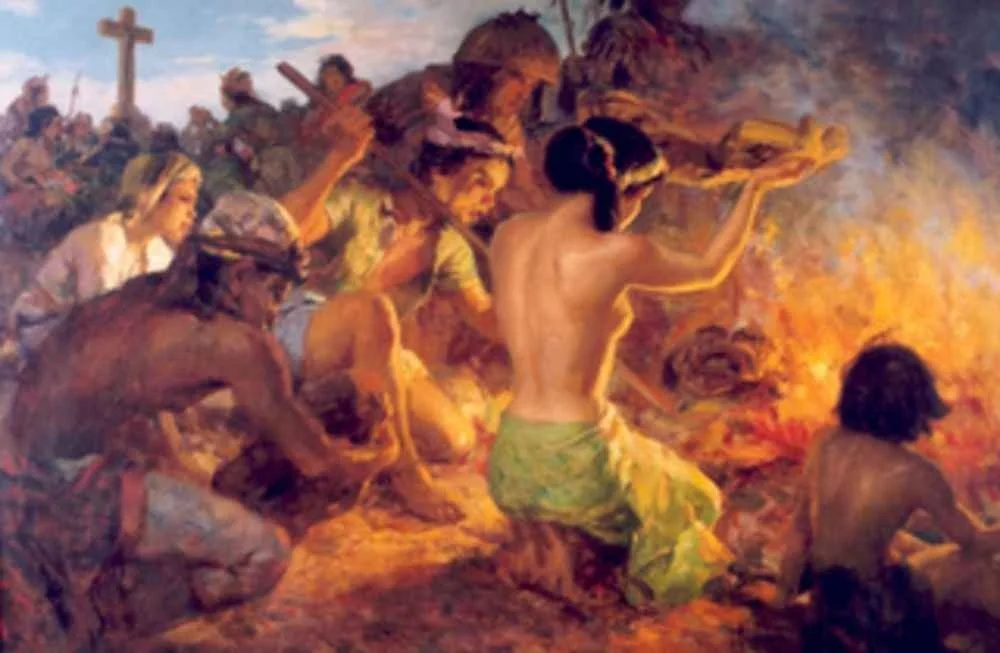
Born in Manila, Fernando Amorsolo became the first National Artist of the Philippines. After studying European masters during a trip to Spain in 1916, he developed his signature backlighting technique that made his landscapes shimmer with what art historian Eric Torres called "sweetness and optimism."
His work celebrates Philippine agricultural life and culture while depicting the nation's struggles under Spanish colonialism and Japanese occupation during World War II.
Over his prolific career, he received international recognition including a UNESCO gold medal in 1959 and becoming the most influential Philippine painter of the 20th century before his death in 1972, one month before his 80th birthday.
THE BABAYLAN
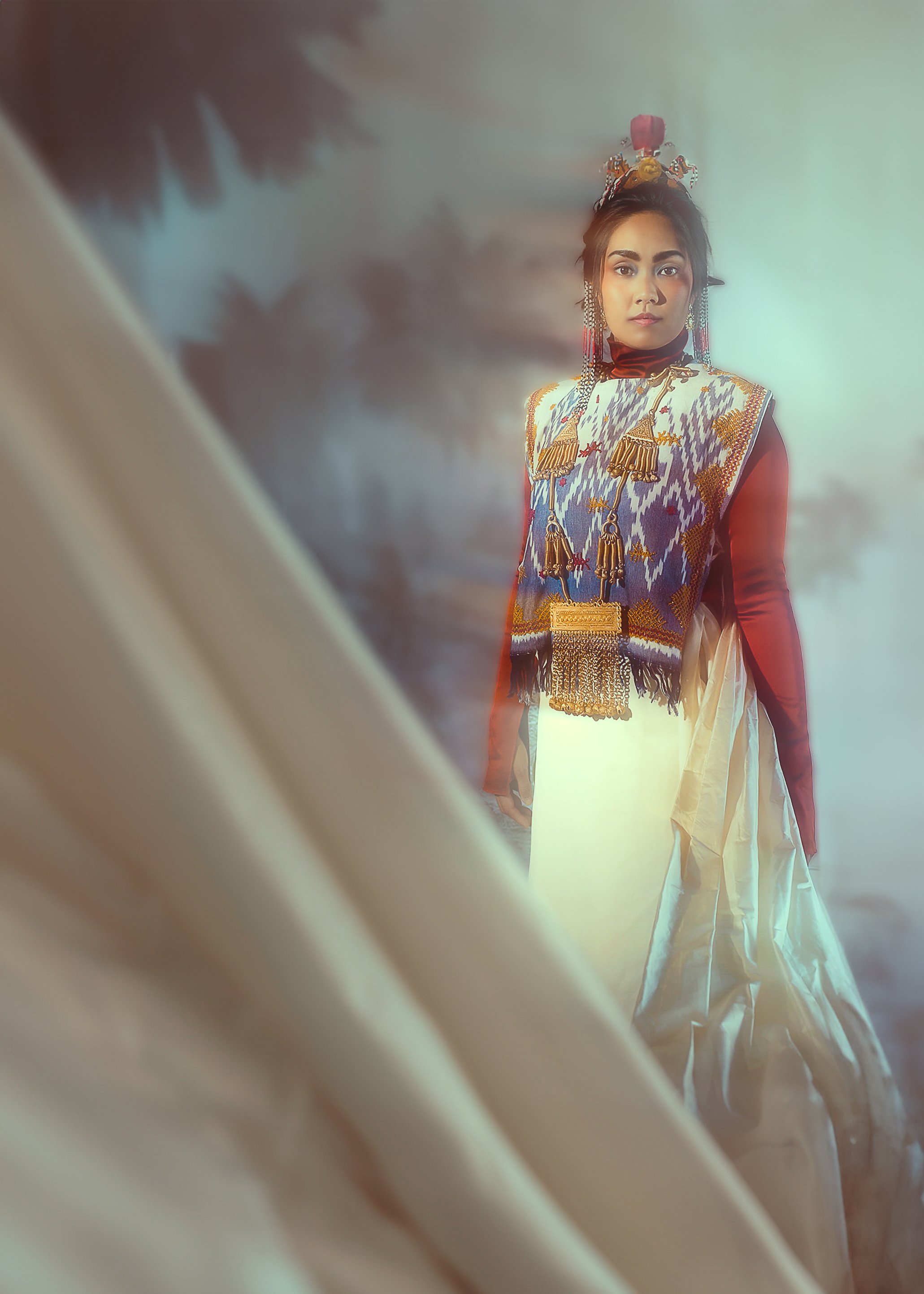
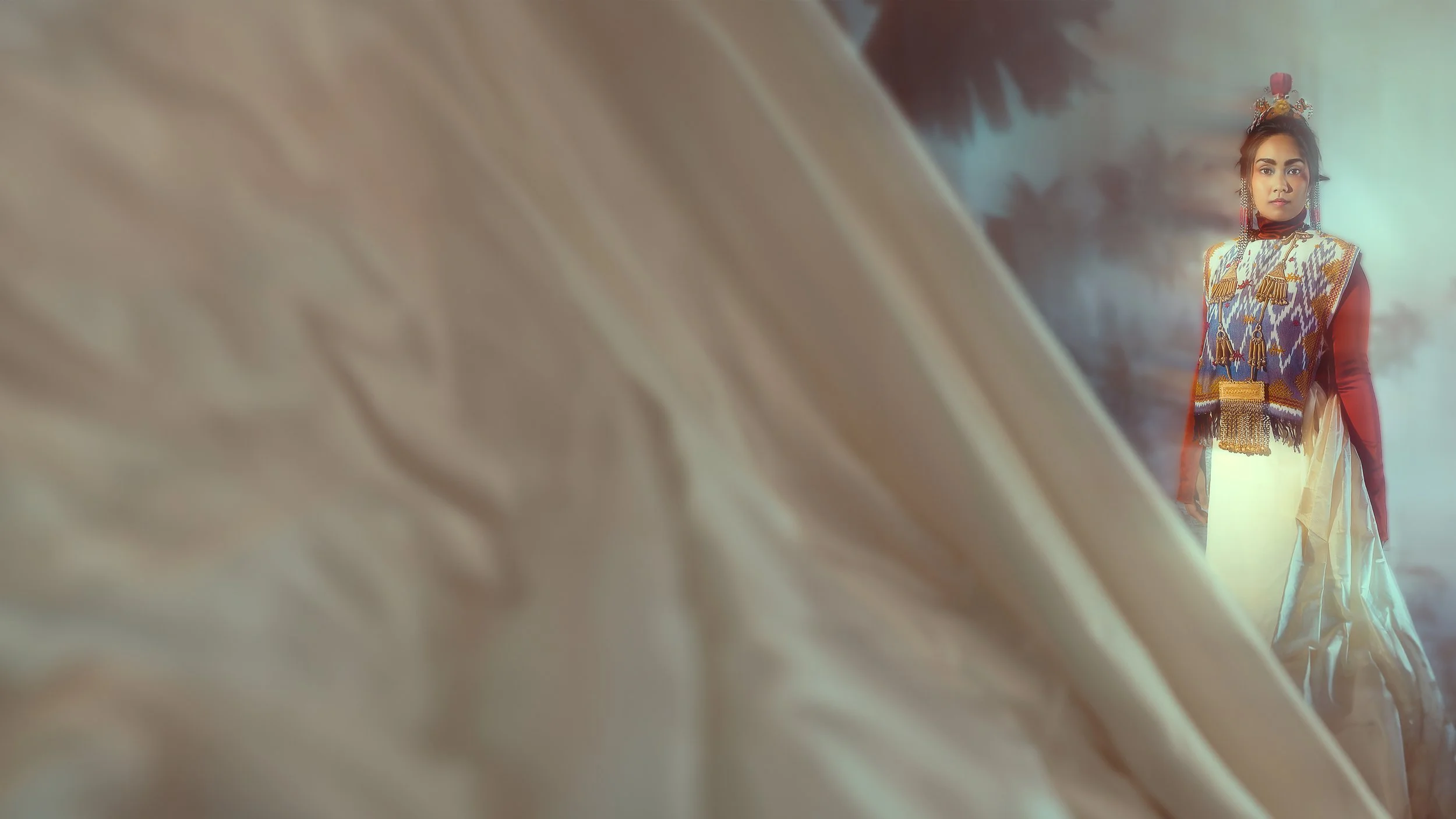
She stands before him, adorned in layers of memory. The Babaylan wears the wisdom of generations—vibrant textiles that speak of mountains and sea, bronze work crafted by hands long gone, patterns that carry stories older than colonization.
She is neither fully of this world nor entirely spirit. She is the keeper of what was nearly forgotten, the guardian of knowledge that colonizers tried to bury but could not destroy. In her presence, the air shifts.
Time becomes fluid. She has come to take him home to himself.
Tribal headdress, bronze necklace, and beaded vest by T’boli Tribe
Red long sleeve top by ASPESI
Ivory skirt by Stella McCartney
Silk train by Norma Kamali

THE T’BOLI TRIBE
DREAMWEAVERS
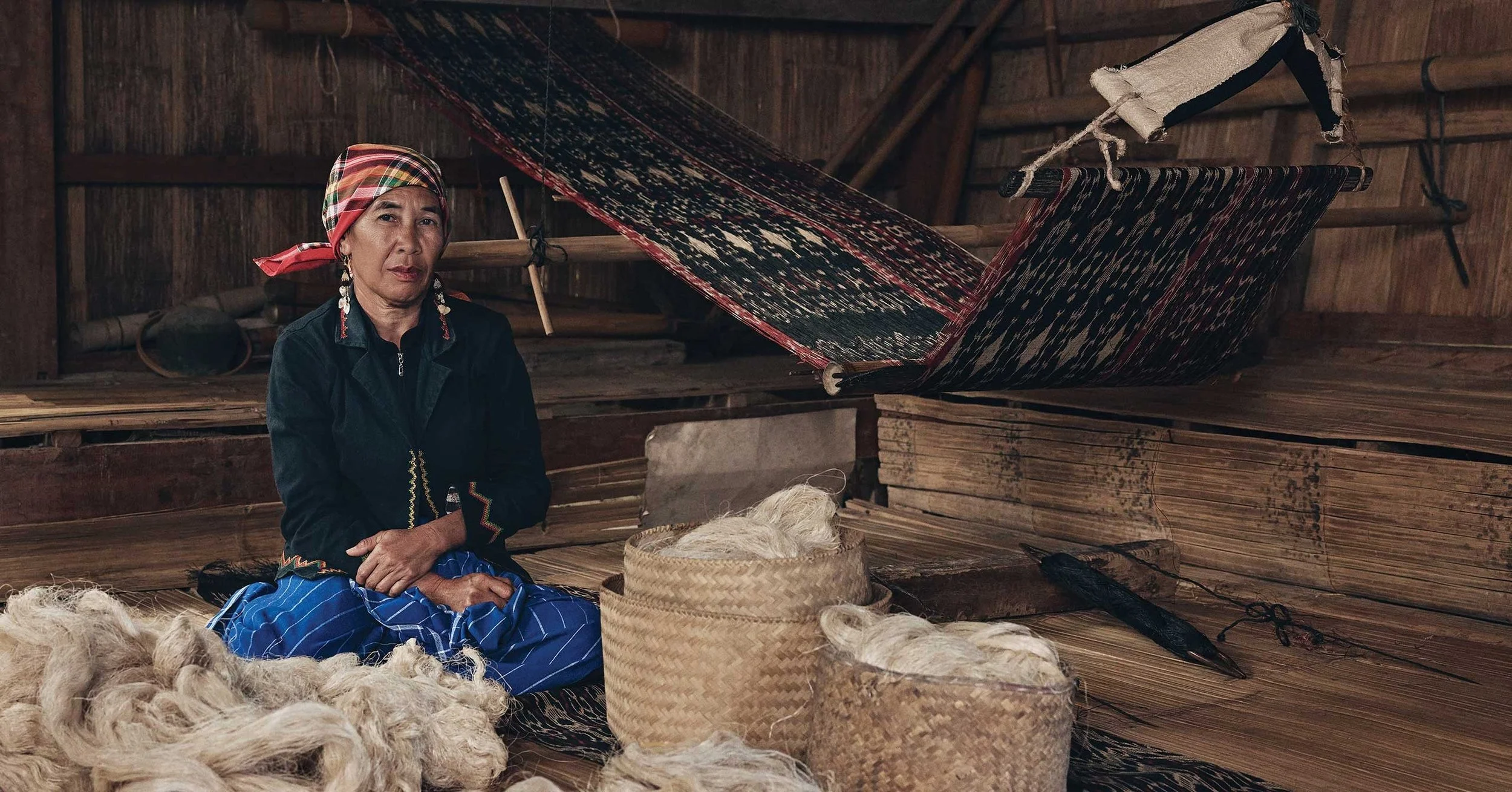
The T'boli indigenous people of the vast Lake Sebu in South Cotabato, Mindanao, believe that the patterns of the t'nalak are bestowed upon chosen women by Fu Dalu, the goddess of abaca.
These women, often led by their ancestors, dream of the sacred patterns that they then transform into the textile.
The traditional colors of the t'nalak hold symbolic meaning for the T'bolis. The white or natural color of the abaca stands for purity. Red is for the blood of their ancestors, while black symbolizes the soil from which they came.
THE AWAKENING
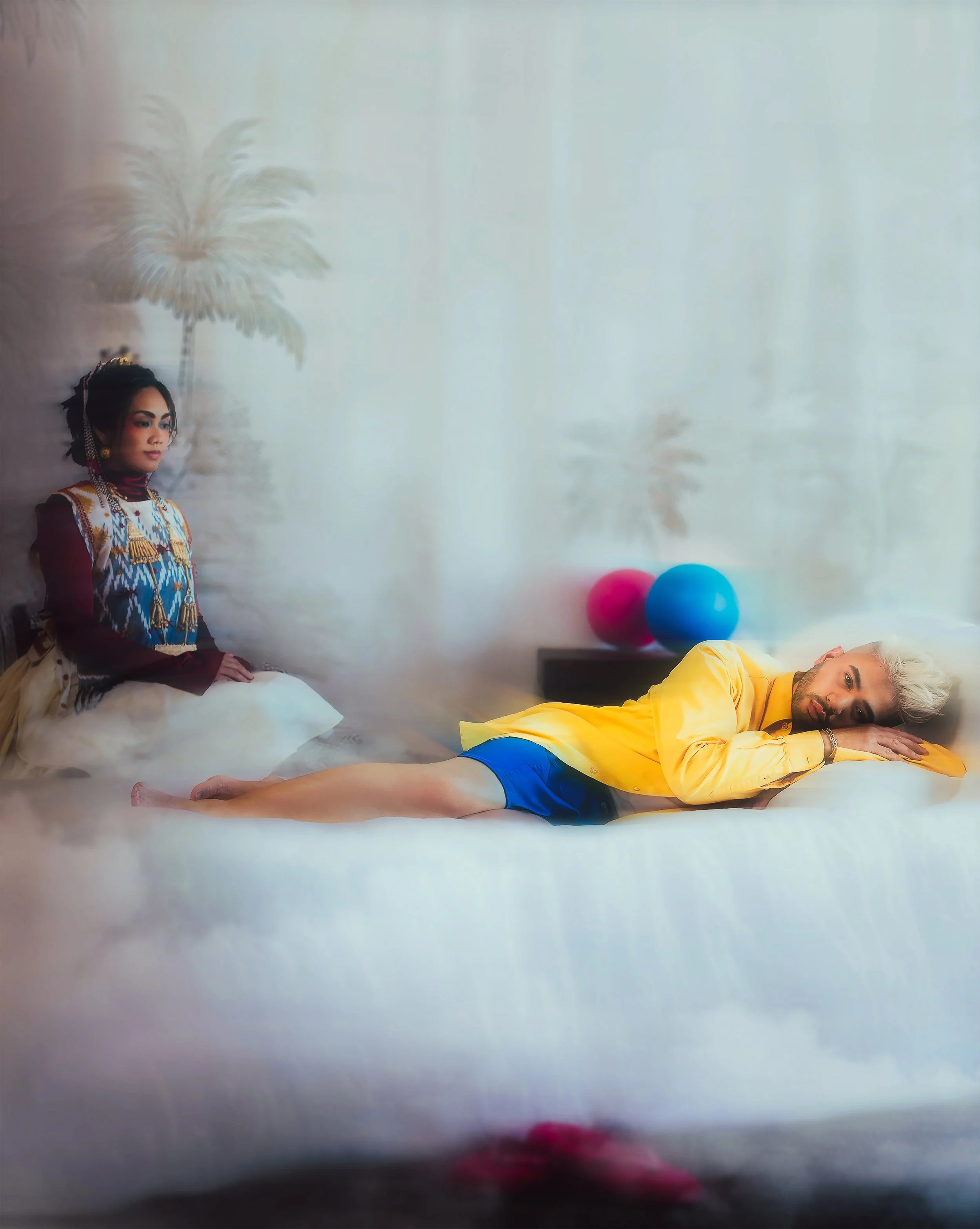
He wakes to find her watching over him, seated at the foot of his bed like a guardian between worlds.
His room feels familiar yet strange—childhood toys casting shadows that look like ancestors, the scent of his grandmother's cooking lingering in air that shouldn't hold it.
Is this dream or memory? Her gaze holds no judgment, only patient knowing. She has waited lifetimes for this moment.
The boy realizes he is both child and man, both sleeping and awake. The journey is about to begin.
On the Babaylan: Tribal headdress, bronze necklace, and beaded vest by T’boli Tribe
Red long sleeve top by ASPESI
Ivory skirt by Stella McCartney
Silk train by Norma Kamali
On the boy: Yellow overshirt by KENZO
Blue silk boxers by Royal Silk

PAGTATAWAS
A PRE-COLONIAL PRACTICE
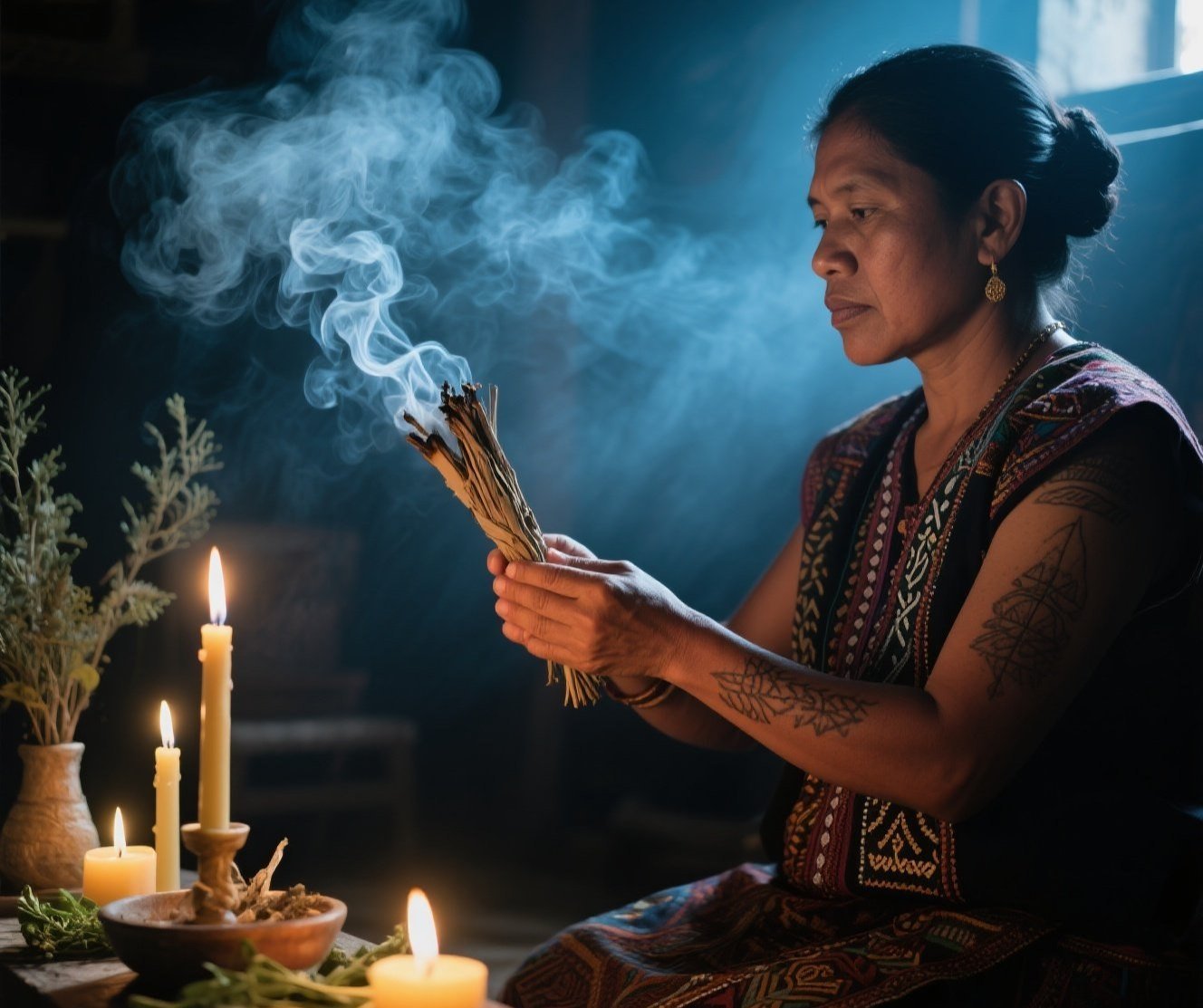
In the heart of the Philippines, long before modern medicine, there existed a deeply rooted healing tradition passed down from generation to generation. This practice is called "pagtatawas".
It is a form of folk healing performed by a traditional healer known as an albularyo. For centuries, Filipinos, especially in rural areas, relied on this ritual to understand mysterious illnesses, misfortunes, or unexplained events in their lives.
The healer lights the candle and lets the melted wax drip into the water. As the wax cools, it forms shapes and patterns.
THE RITUAL
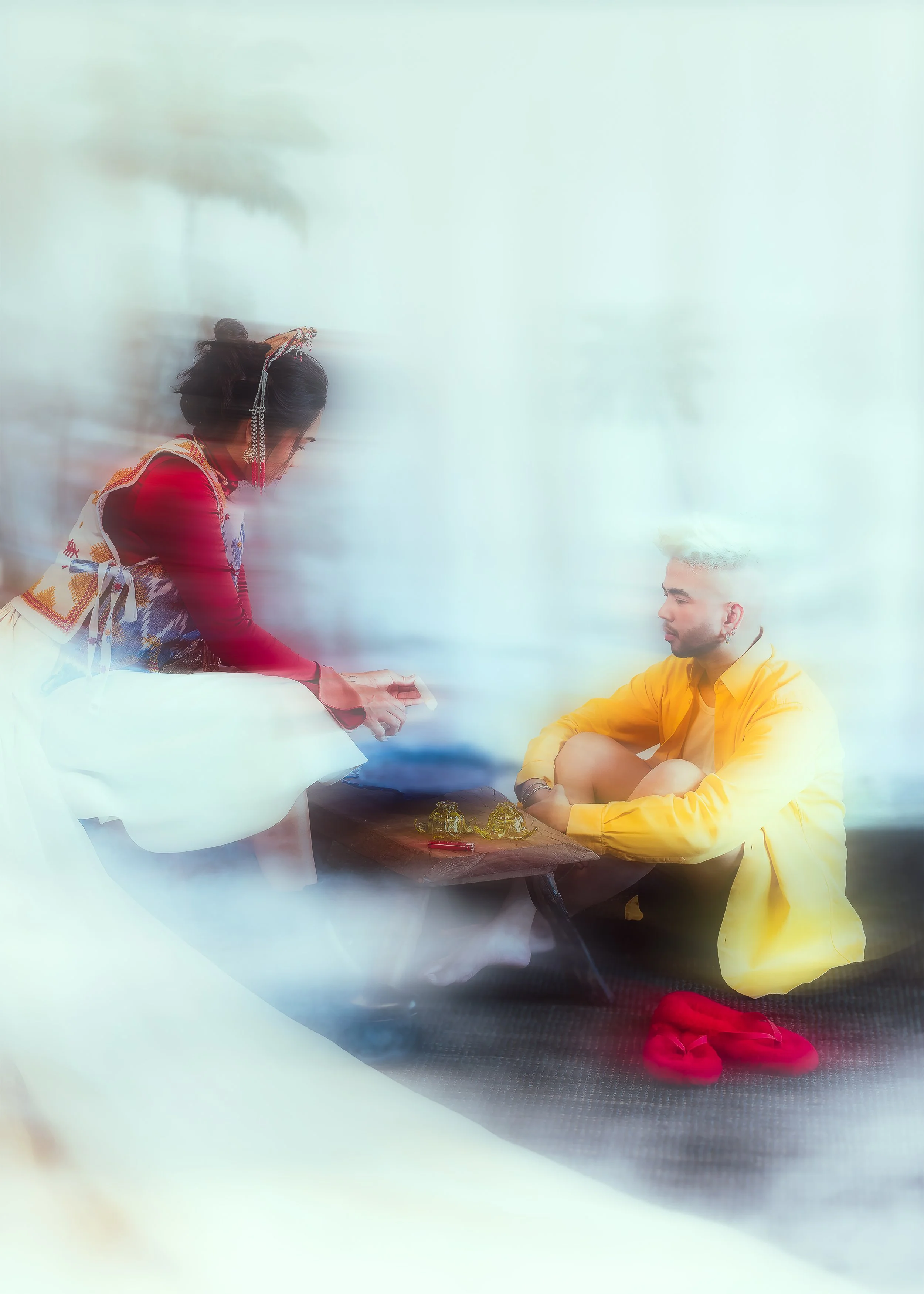
At her feet, he watches her perform the carromancy—hands moving over objects that hold futures and pasts simultaneously.
She reads not what will be, but what has always been. The ritual is older than the Christianity that tried to erase it, older than the shame that made his family whisper about such things.
Through candlelight and sacred geometry, she opens the portal to his memories. Each gesture pulls at threads he didn't know were still attached to his heart.
Something unlocks inside him, a door he didn't know he'd closed.
On the Babaylan: Tribal headdress, bronze necklace, and beaded vest by T’boli Tribe
Red long sleeve top by ASPESI
Ivory skirt by Stella McCartney
Silk train by Norma Kamali
On the boy: Yellow overshirt by KENZO
Blue silk boxers by Royal Silk
Red shearling thong slippers by TIBI
SWALLOWING FIRE
SURVIVAL AND REBELLION
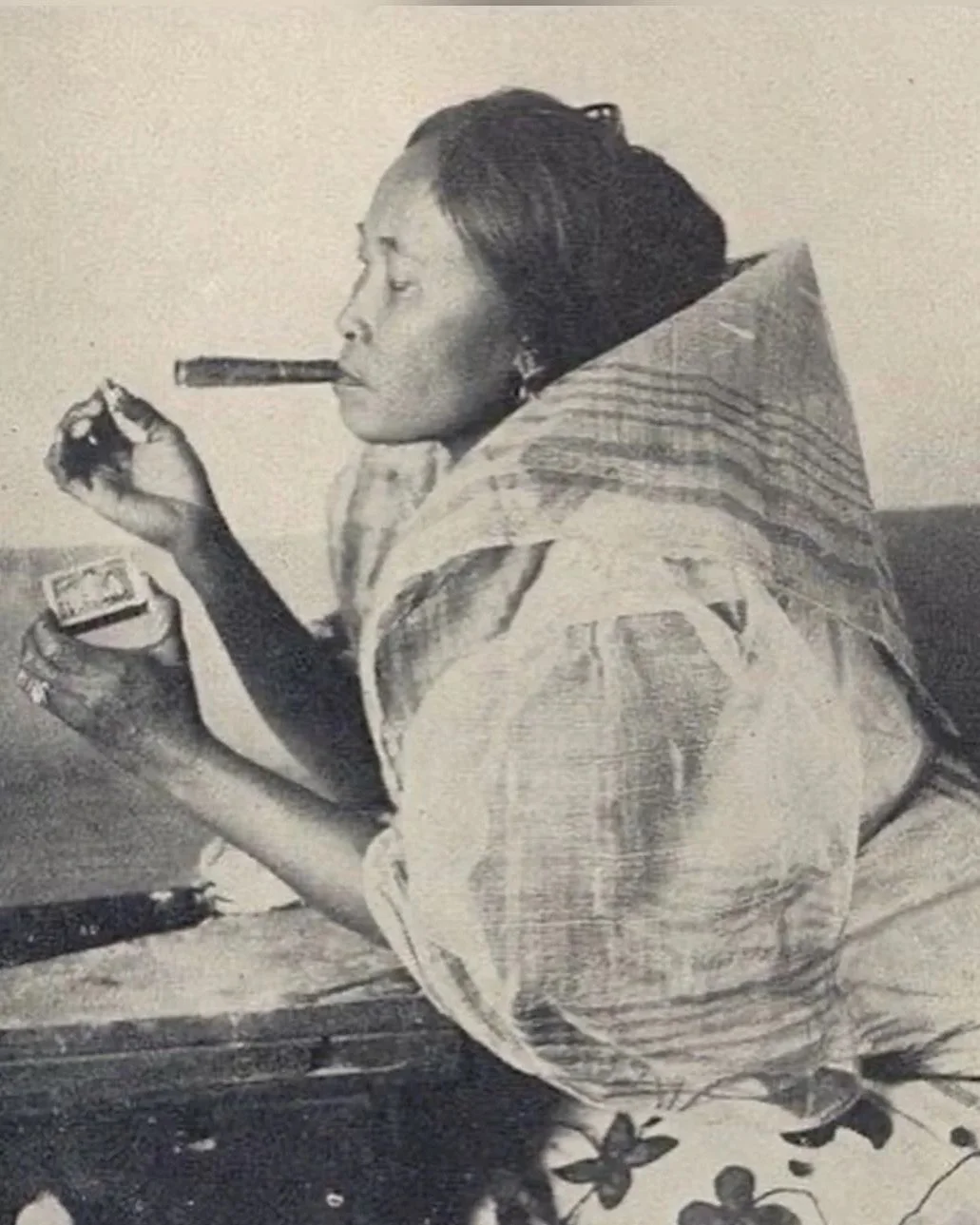
Defiance in reverse. Filipino women of my grandmother's and great-grandmother's generations practiced reverse smoking, sometimes called "bakwe" or "paninigarilyong pagbaliktad", placing the lit end of the cigarette inside their mouths.
Some say this began during Japanese occupation, a tactic to hide embers and smoke from enemy patrols. Others remember it simply as a demonstration of strength, a quiet rebellion against both colonial expectations and gendered assumptions about who could claim this small pleasure.
POWER TO THE MATRIARCHY

Memory blooms like monsoon rain—sudden, overwhelming, essential. She appears before him: not one woman but all of them at once.
His grandmother's hands, his mother's voice, his aunt's laughter, the neighbor who fed him when his parents worked late.
They exist in this singular figure draped in maternal knowing, her presence a reminder that Filipino identity is woven by women's hands. She taught him to season by taste, to pray in two languages, to carry shame and pride in equal measure. In her face, he sees every sacrifice made so he could forget, every tradition preserved so he could remember.
Straw hat by Gigi Burris
Abaca fiber Filipiniana blouse, vintage 70’s
Garment dyed silk sash, vintage Japanese scarf
Black sequin denim pants by R13
Black raffia sandals by NCUB
PATEROS LIBERATION
BETWEEN VICTORY AND FREEDOM
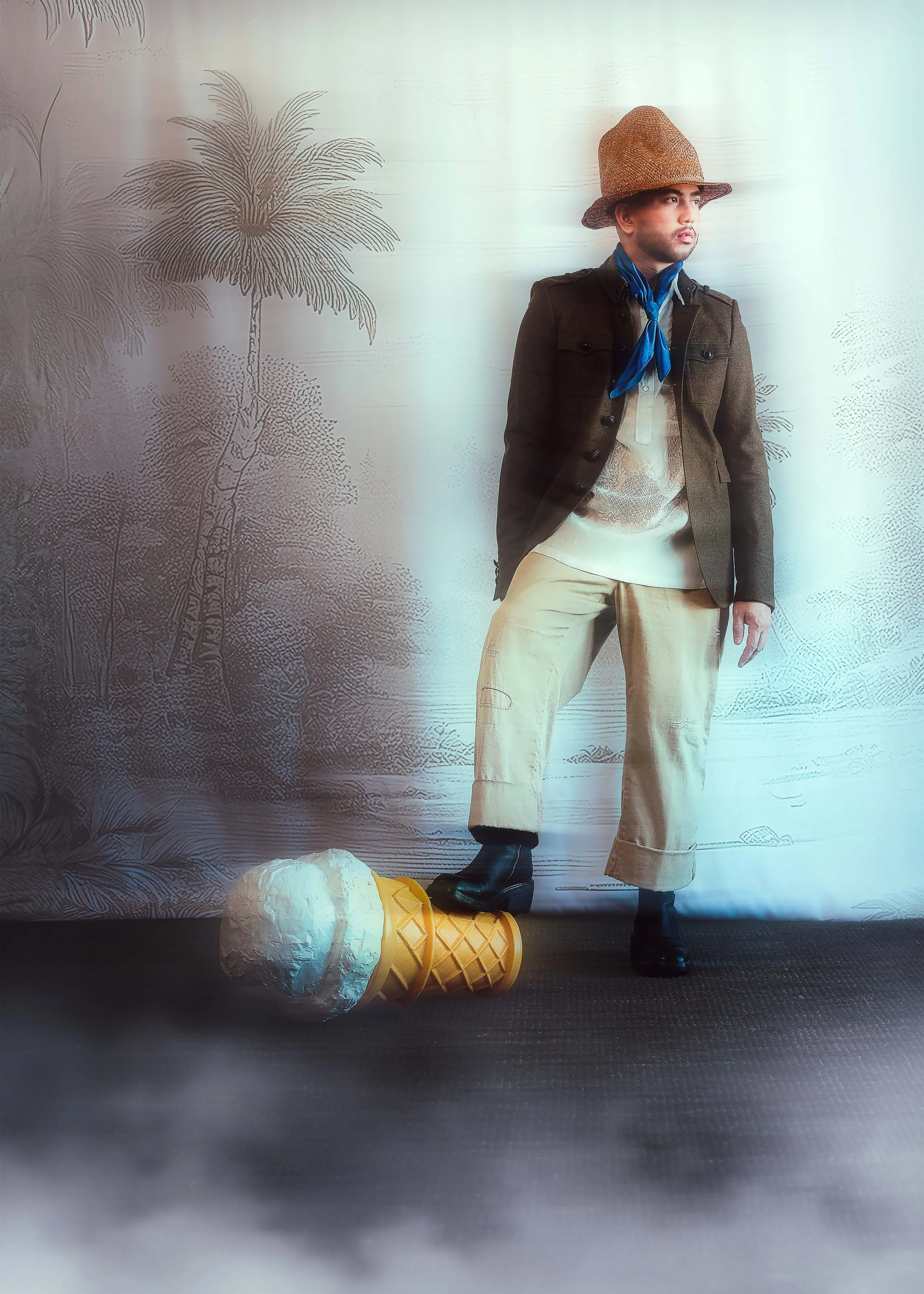
This image captures the layered complexity. Japan had just been defeated, Spain had colonized for 333 years before that, and now America offered frozen treats while delaying the independence Filipinos had been fighting for since 1896.
The same hands that liberate also control. This is what we taste when we talk about colonial complexity. The sweetness is real, but so is everything that came with it.
SWEET SUBJUGATION
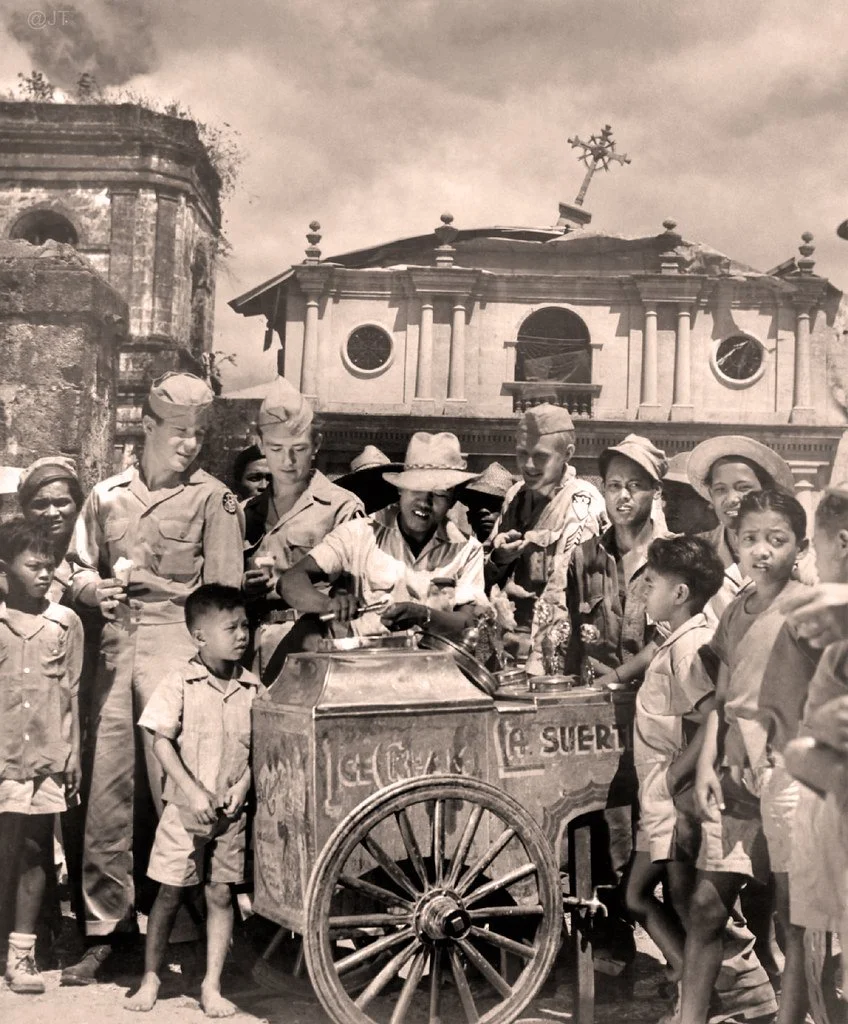
Another vision surfaces, both joyful and bitter. Filipino children cluster around a "sorbetero" surrounded by American soldiers, faces bright with sugar and something more complicated, gratitude twisted with subjugation, delight shadowed by dependence.
This is the inheritance: colonization disguised as generosity, occupation served with a smile. But he can taste the sweetness and still know the truth. He can reclaim what was forced upon him and make it his own.
Straw mounty hat by BODY BODY SONG
Abaca fiber barong tagalog, vintage 70’s
Khaki wool military jacket by Burberry
Boro patchwork pants by Ralph Lauren
Black leather boots by Marséll
YOUTH
A NECESSARY LUXURY
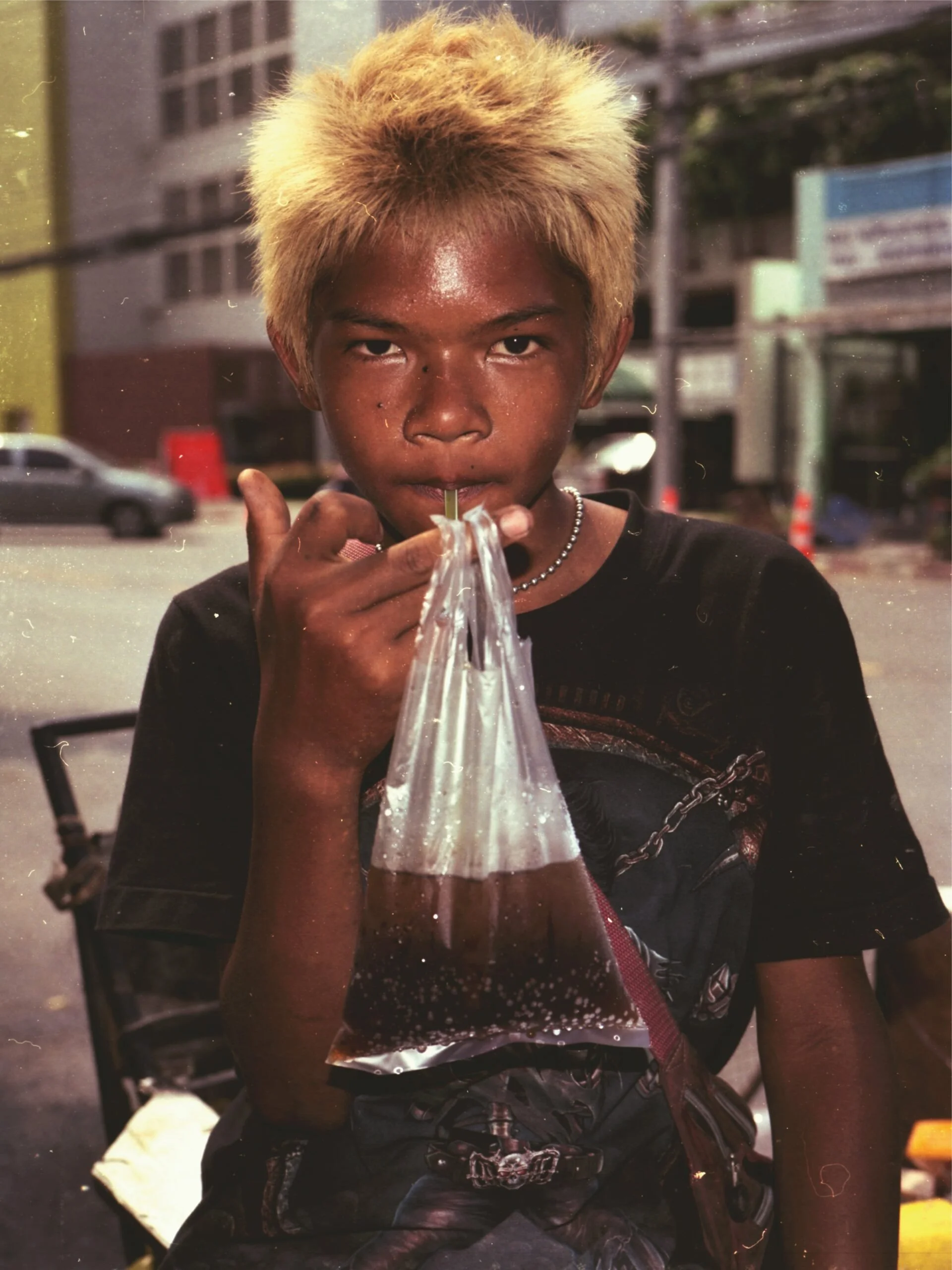
The bag sags with the weight of liquid, sweat collecting on its sticky exterior. There's nothing elegant about it, but elegance isn't the point.
The point is cold sweetness on a hot day when you have limited pesos and unlimited thirst. The point is making do with what's available and turning constraint into its own kind of innovation.
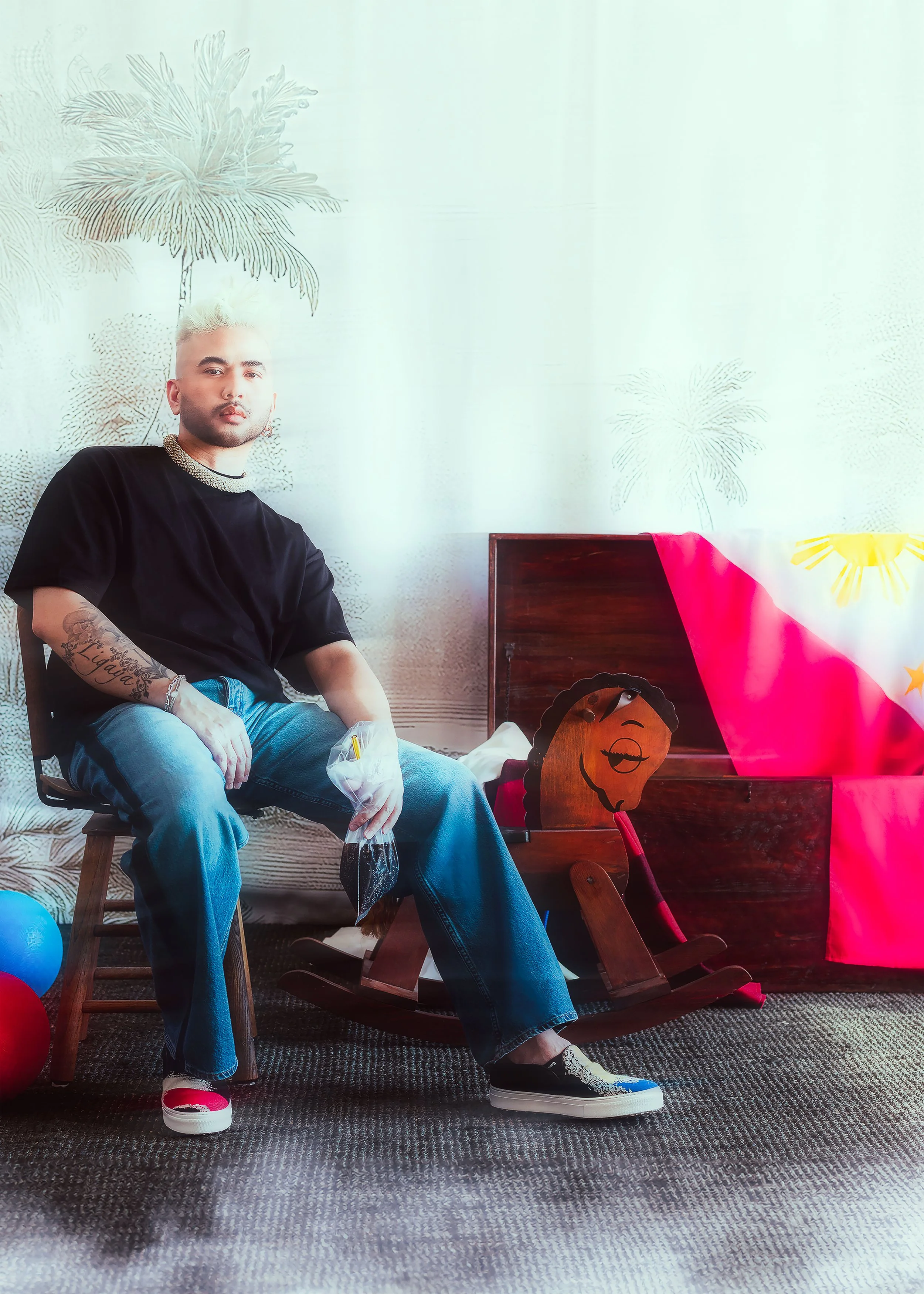
BOTH/AND
This is what refusing to choose looks like. The plastic bag says "I come from places where you make do with what you have." The crystals say "I've earned the right to shine."
Some expect you to pick one story—perform humility or perform success, show your struggle or show your achievement. We know better. We carry both. The resourcefulness that got us here doesn't disappear when we finally have something.
The hunger doesn't leave justbecause we've eaten. You don't erase where you came from to prove you've arrived.
Black bonded cotton tee by B-USED
Crystal pave choker by Burberry
Denim pants with tuxedo strip by Madewell
Multicolor canvas slip-on sneakers by CÉLINE
DIOS BUHAWI
PONCIANO ELOFRE
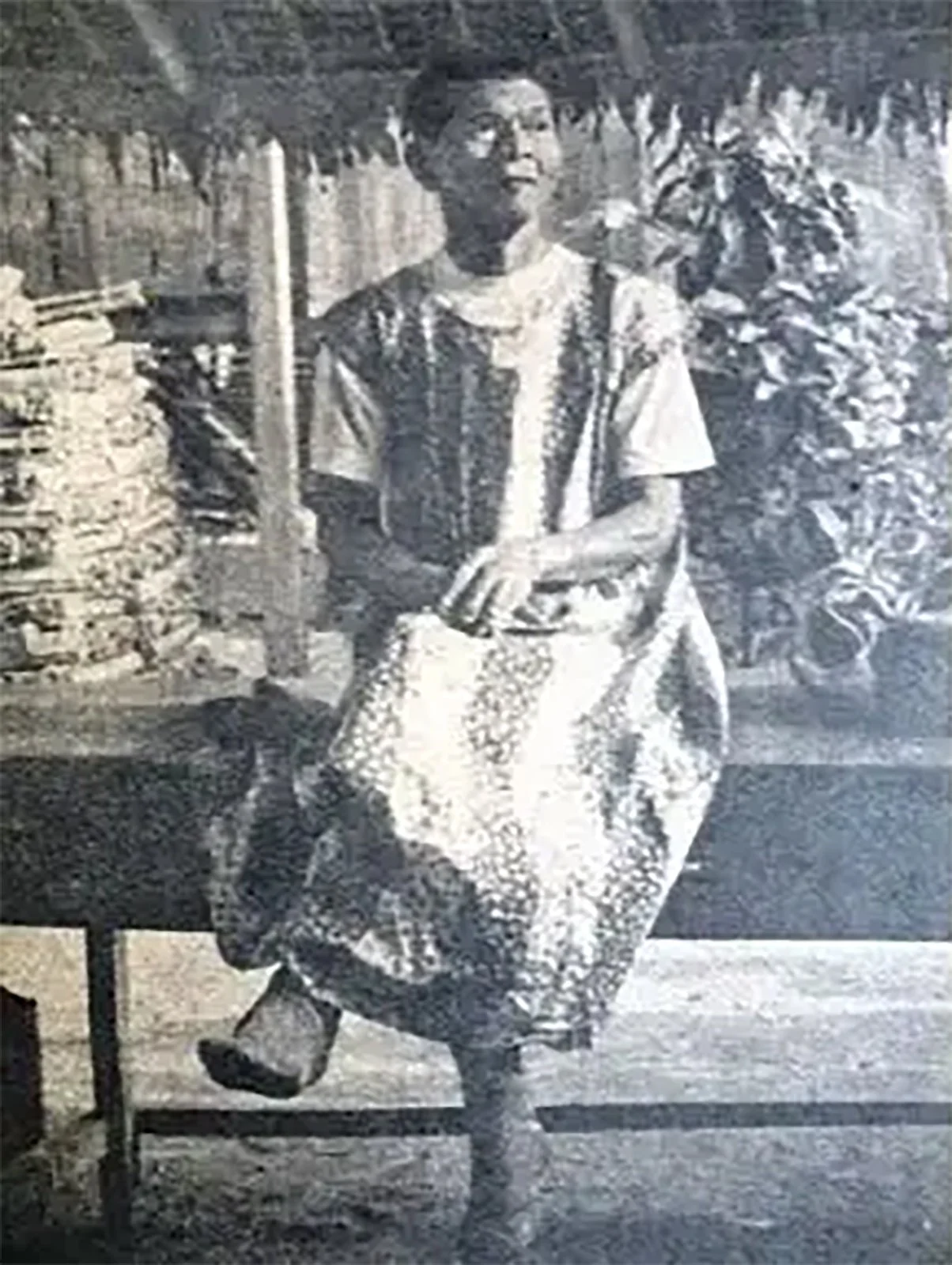
Before they were erased, they led revolutions. Ponciano Elofre, known as Dios Buhawi, was a Babaylan who led 2,000 followers in revolt against Spanish forces in the 1880s.
Elofre moved beyond colonial gender categories and the Spanish government was so threatened they sent 500 troops and a battleship to suppress him.
Those who existed outside binary genders were more than accepted in pre-colonial Philippines, they were powerful enough to threaten empires.
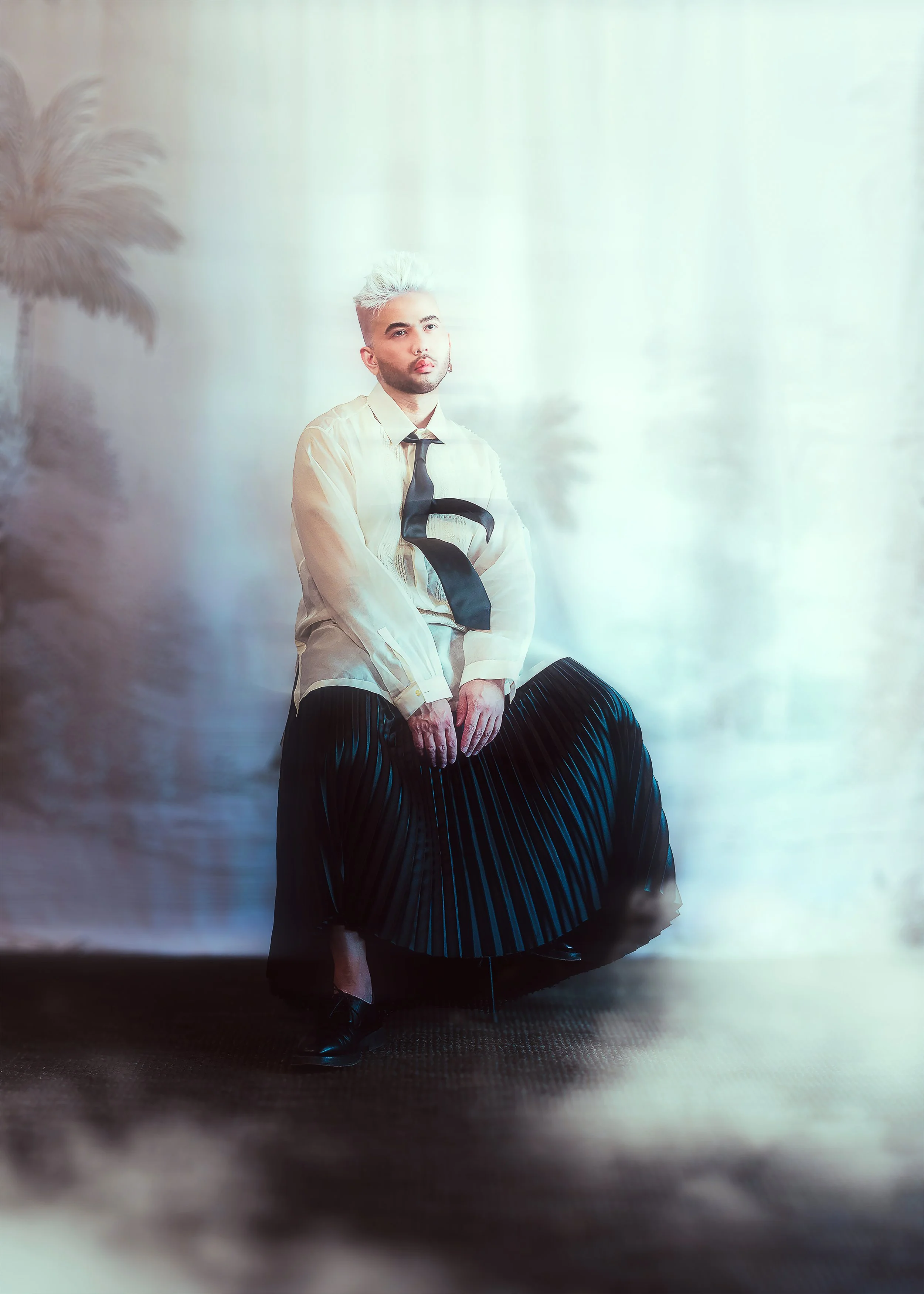
SHAME NO MORE
Before Spanish colonization, the Philippines honored the Babaylans. Many moved through the world in ways that defied simple classification, respected and essential to their communities.
After the arrival of the Spanish, the Babaylans were labeled dangerous, their way of existing pushed into hiding or erased entirely.
He stands now draped in the classic Barong Tagalog subverted with a skirt, claiming his right to exist fully, to be seen clearly, to move through the world without having to choose only one part of himself.
Abaca fiber barong tagalog, vintage 70’s
Black silk tie by VALENTINO
Asymmetric black pleated skirt by Junya Watanabe
Black leather lace-up derbies by Marséll
STITCHING REVOLUTION
PAMBANSANG WATAWAT
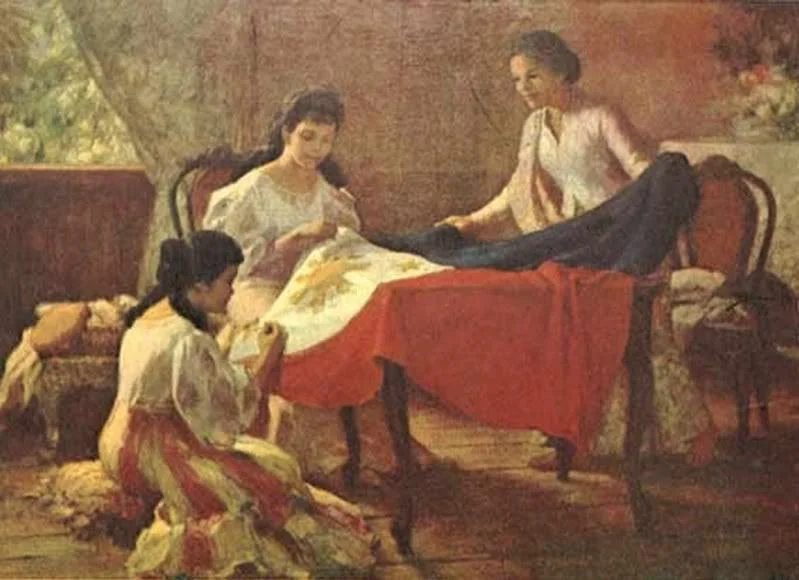
In Hong Kong in 1898, three Filipinas, Marcela Agoncillo, her daughter Lorenza, and Delfina Herbosa de Natividad, created the flag that would be unfurled in battle against Spanish forces.
The white triangle represents liberty, equality, and fraternity. The three stars symbolize Luzon, Visayas, and Mindanao. The eight rays of the sun honor the first eight provinces that revolted against Spain. The colors red, blue, and white were deliberately chosen to echo the American flag, honoring the United States for its "disinterested protection" during the revolution.
Within a year, those same Americans would suppress the Philippine flag, ban its display during the Philippine-American War, and delay true independence for nearly five decades. The flag was stitched in hope for one liberator, only to welcome another colonizer.
EMERGENCE
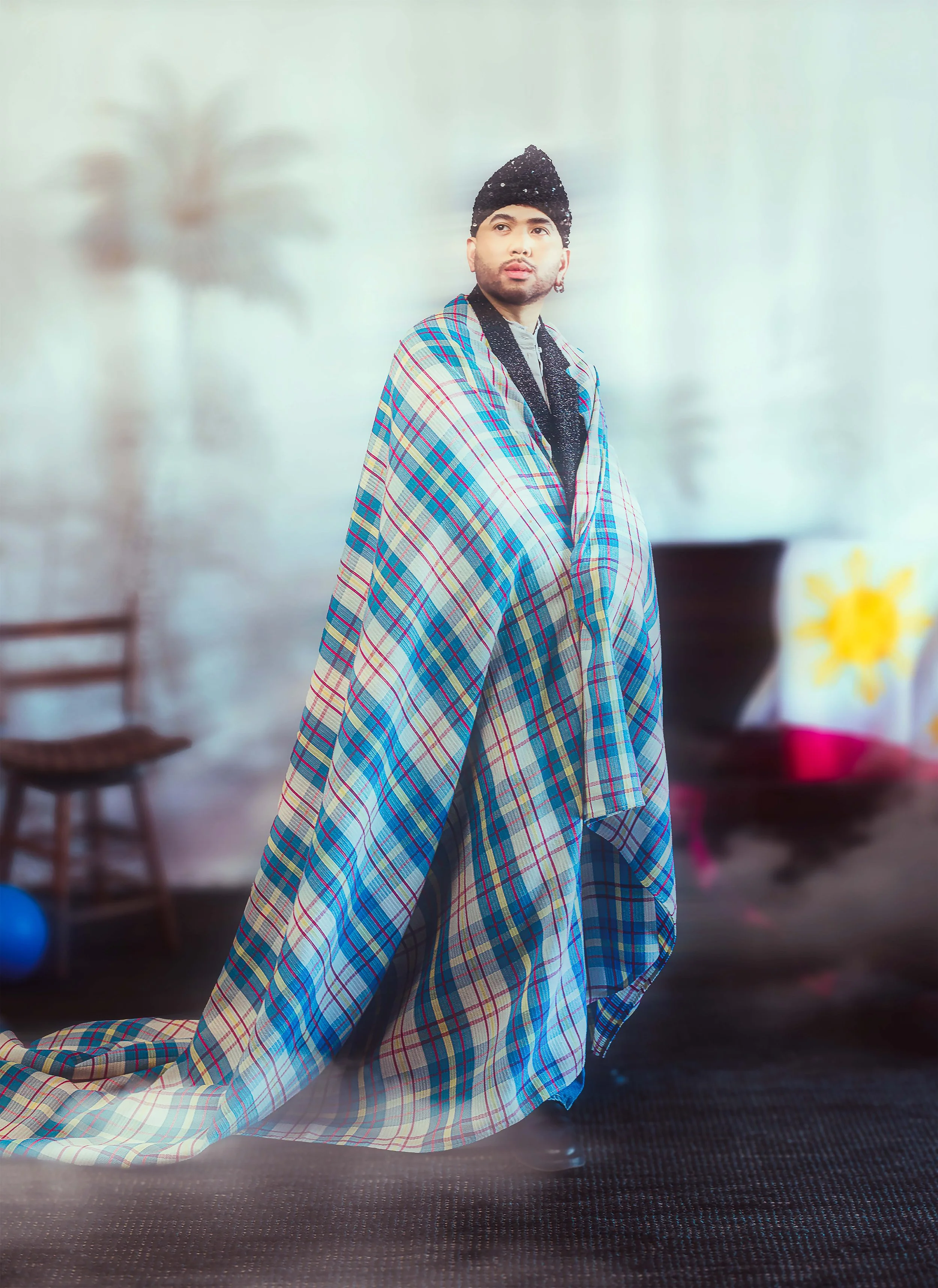
Transformation arrives wrapped in the colors of home. A quilted blanket bearing the Filipino flag, red for courage, blue for peace, white for purity, drapes across his shoulders.
The tuxedo jacket speaks of assimilation, of learning to code-switch and conform.
The sequined beanie catches light like defiance. The denim reinvents formality into something lived-in, something true.
He holds the blanket close, relishing what he has just experienced, but his grip is already loosening. What emerges is the boy who forgot who he was but is now the man who knows exactly who he is.
Black sequin beanie by BODE
White tuxedo shirt by Helmut Lang
Black metallic lurex double-breasted blazer by Lardini
Denim pants with tuxedo stripe by Madewell
Black leather lace-up derbies by Marséll
Multicolor check pattern blanket, vintage 70’s
LET THE MASKING BEGIN
WHERE IT ALL BEGAN
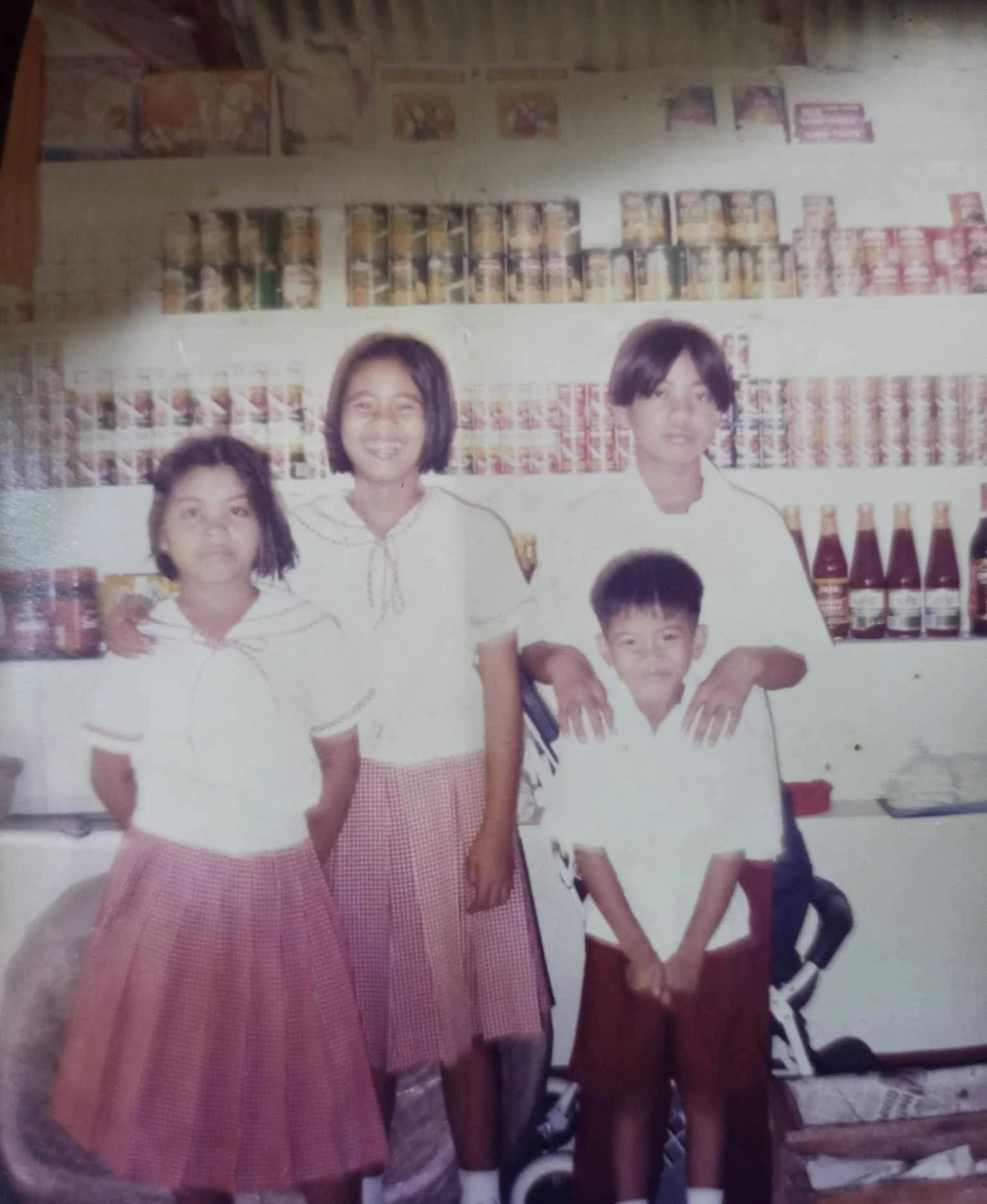
This is where the masking began. The burgundy bermuda shorts, the white button down, the Catholic school uniform that taught conformity before anything else.
In this photograph, he stands with his siblings before walking to school, learning how to become what was expected, how to hide.
The uniform was the first lesson he learned in molding himself to survive, in wearing whatever face would keep him safe.
By the time he became good enough at it, he forgot the face underneath, his face.
THE BLESSING
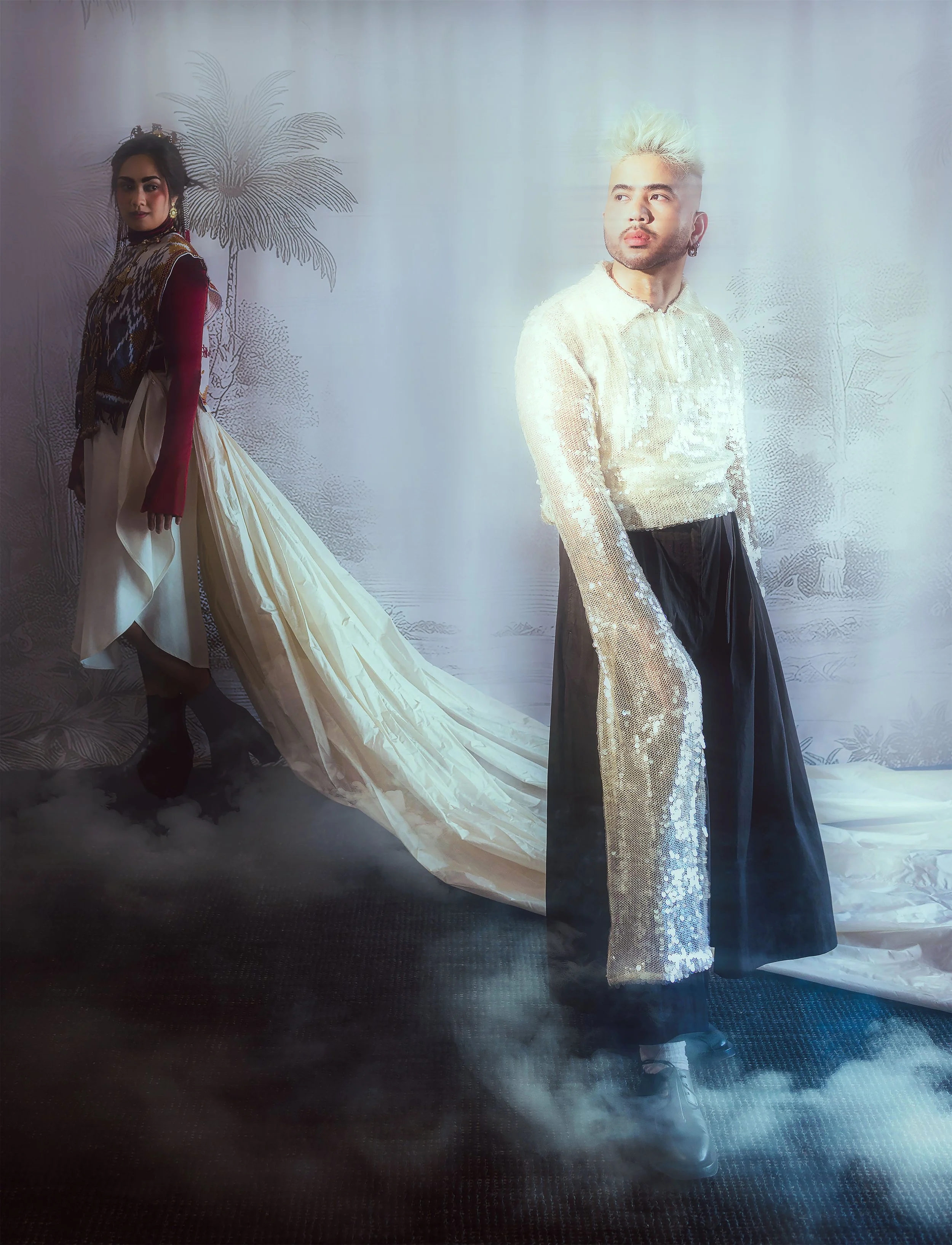
He stands transformed, wearing his own version of the uniform that once made him small. Behind him, the Babaylan begins to fade, her work complete. She looks at him with something beyond pride, recognition. He has found his way back to himself, not by erasing what came between, but by weaving it all together.
The colonization, the assimilation, the shame, the hiding, the emerging, all threads in the same tapestry.
Somewhere between who we were told to be and who we truly are, we all lose the thread.
The Babaylan knows this. She has guided countless souls through the same awakening, the same remembering, the same coming home. Perhaps she is walking beside you now. Perhaps she has been there all along, waiting for you to fall asleep so you can finally wake up.
On the Babaylan: Tribal headdress, bronze necklace, and beaded vest by T’boli Tribe
Red long sleeve top by ASPESI
Ivory skirt by Stella McCartney
Silk train by Norma Kamali
On the boy: White sequin long sleeve top by Coperni
Black wide leg culottes by Studio Nicholson
Black leather lace-up derbies by Marséll
I CARRY YOUR HEART WITH ME
E.E CUMMINGS
i carry your heart with me (i carry it in my heart) i am never without it (anywhere
i go you go, my dear; and whatever is done
by only me is your doing, my darling)
i fear no fate (for you are my fate, my sweet) i want no world (for beautiful you are my world, my true)
and it’s you are whatever a moon has always meant and whatever a sun will always sing is you
here is the deepest secret nobody knows
(here is the root of the root and the bud of the bud
and the sky of the sky of a tree called life; which grows higher than soul can hope or mind can hide)
and this is the wonder that's keeping the stars apart i carry your heart (i carry it in my heart)
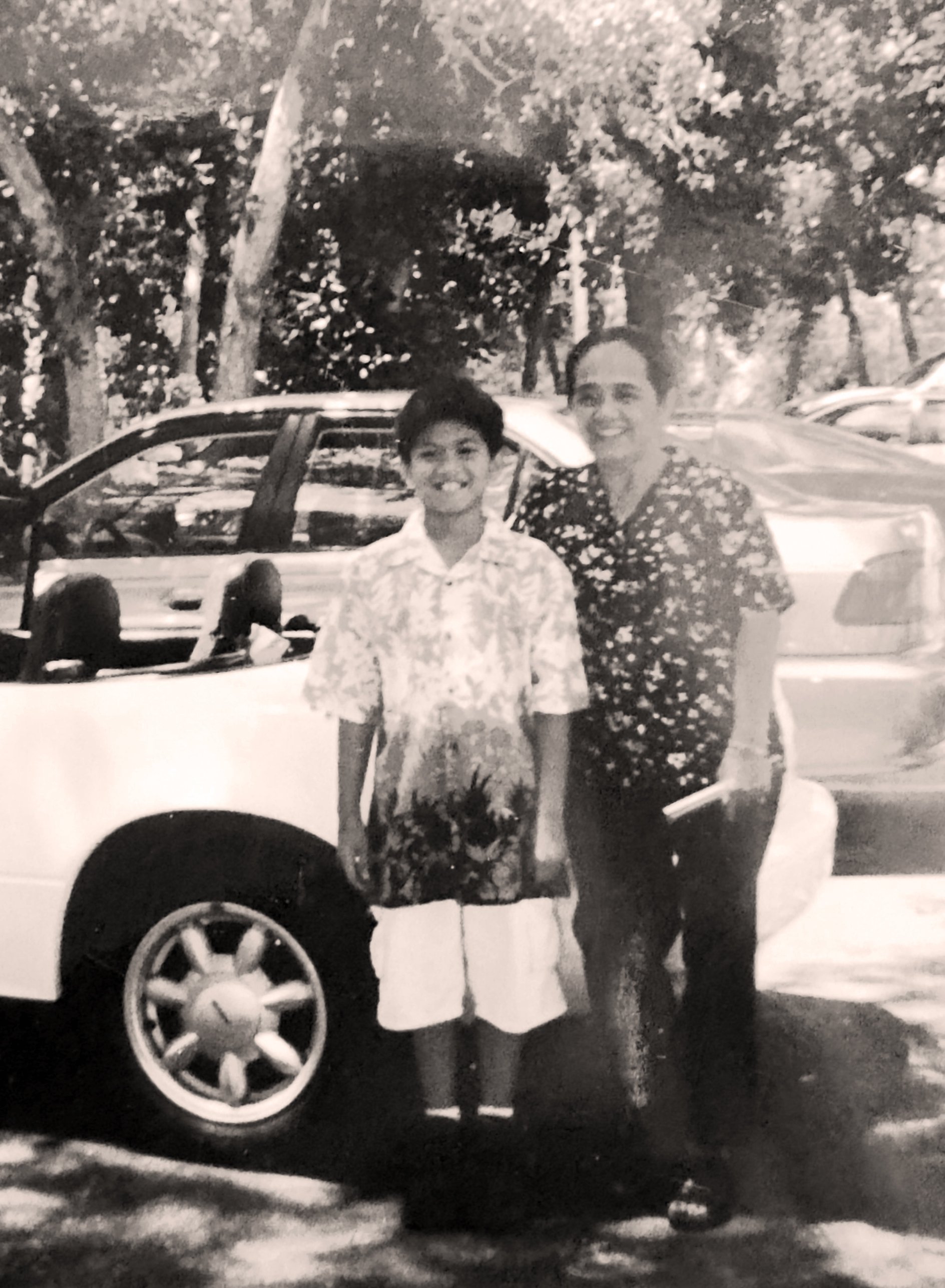
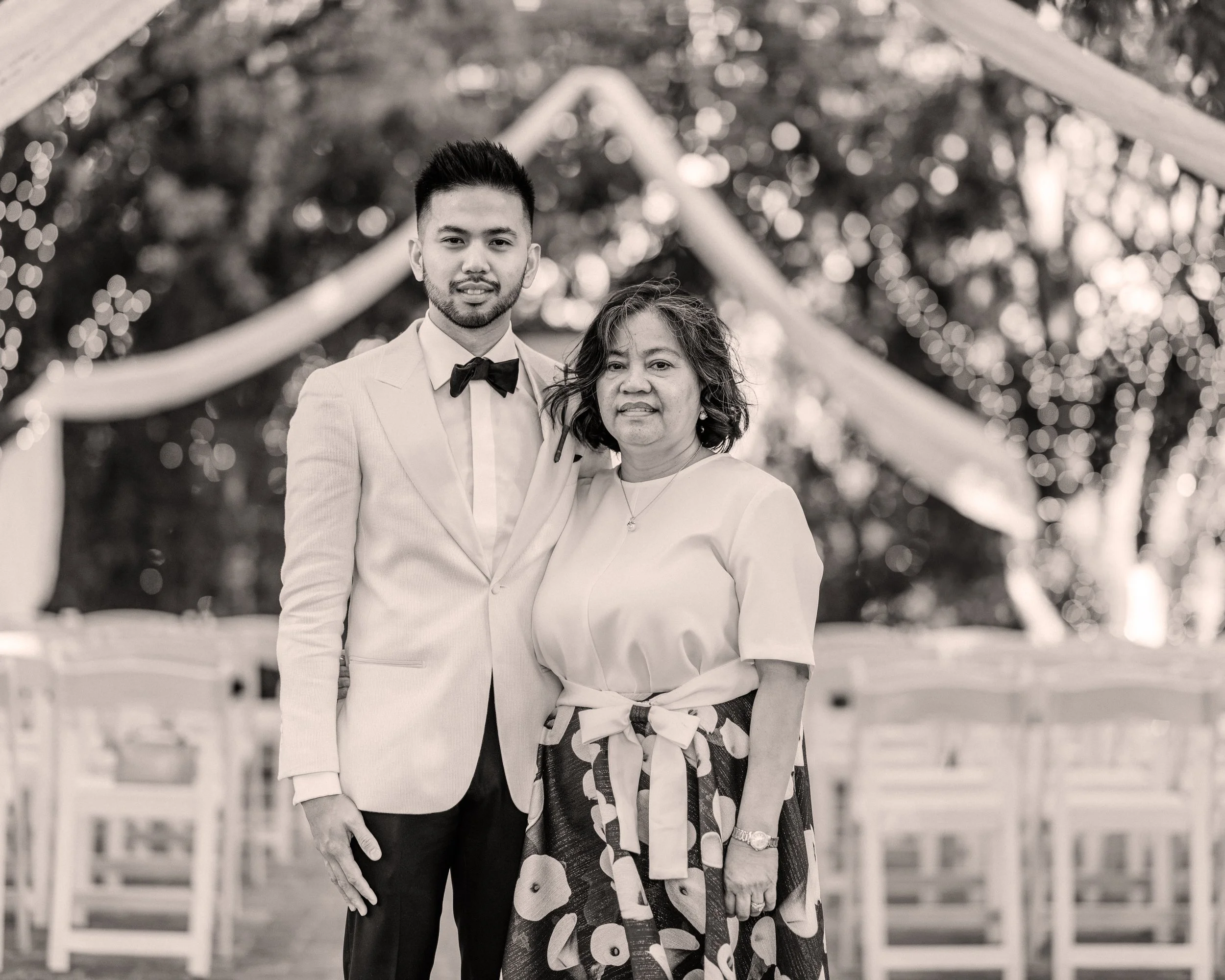
Thank you for walking this journey with me. Thank you for seeing these images not just as art, but as invitations to your own awakening.
When my mother was diagnosed with dementia and my grandmother already in the late stages of her diagnosis, I realized the stories I had yet to learn would disappear forever. This realization became the foundation for everything you've just experienced.
EPHEMERALITY is my attempt to capture what fades before we're ready to lose it. Not just family memories, but the cultural knowledge embedded in photographs, flavors, textures, and the way we present ourselves to the world. Fashion and food became my language because they're how I've always understood belonging. They're how I learned to hide parts of myself, and eventually, how I learned to come home.
This exhibition is deeply personal, but I hope you found yourself somewhere in these images. Whether you're Filipino American navigating between cultures, part of any diaspora community holding multiple identities, or simply someone who's worn masks so long you forgot what was underneath, this story belongs to you too.
The Babaylan guided me back to myself. She showed me that what I thought I'd lost was never gone, just buried. And she reminded me that the journey from forgetting to remembering isn't about erasing what came between. It's about weaving it all together.
My hope is that you leave here asking yourself: What have I forgotten that's worth remembering? What masks am I ready to take off? And who have I always been, underneath everything I learned to become?

A NEW GENERATION OF CULTURE BEARERS
Recently, I discovered something extraordinary about my community, the Filipino American community. It can take some time but when we find each other, the spirit of creativity comes alive.
It’s magic when it happens. Through Portland's vibrant Filipino food scene, digital connections, and chance encounters, I met incredible Filipinas across the city.
But that’s no surprise because just like the women in my family, these Filipina women are formidable. They are entrepreneurs, creatives, community builders, each carrying their own stories of finding belonging in the new places they come to call home.
Story after story, I saw how our community is full of wisdom; it’s got spirit, it’s got soul, it’s got everything DIWA means.
This community has shown up, transforming DIWA from an idea to do a fashion editorial, to dreaming up a whole new platform to tell our stories.
DIWA exists because of this serendipitous collaboration. And it is this very collaborative spirit that drives our mission to amplify each other's voices.
Together, we all come home to ourselves.
OUR CREATIVE COLLABORATORS
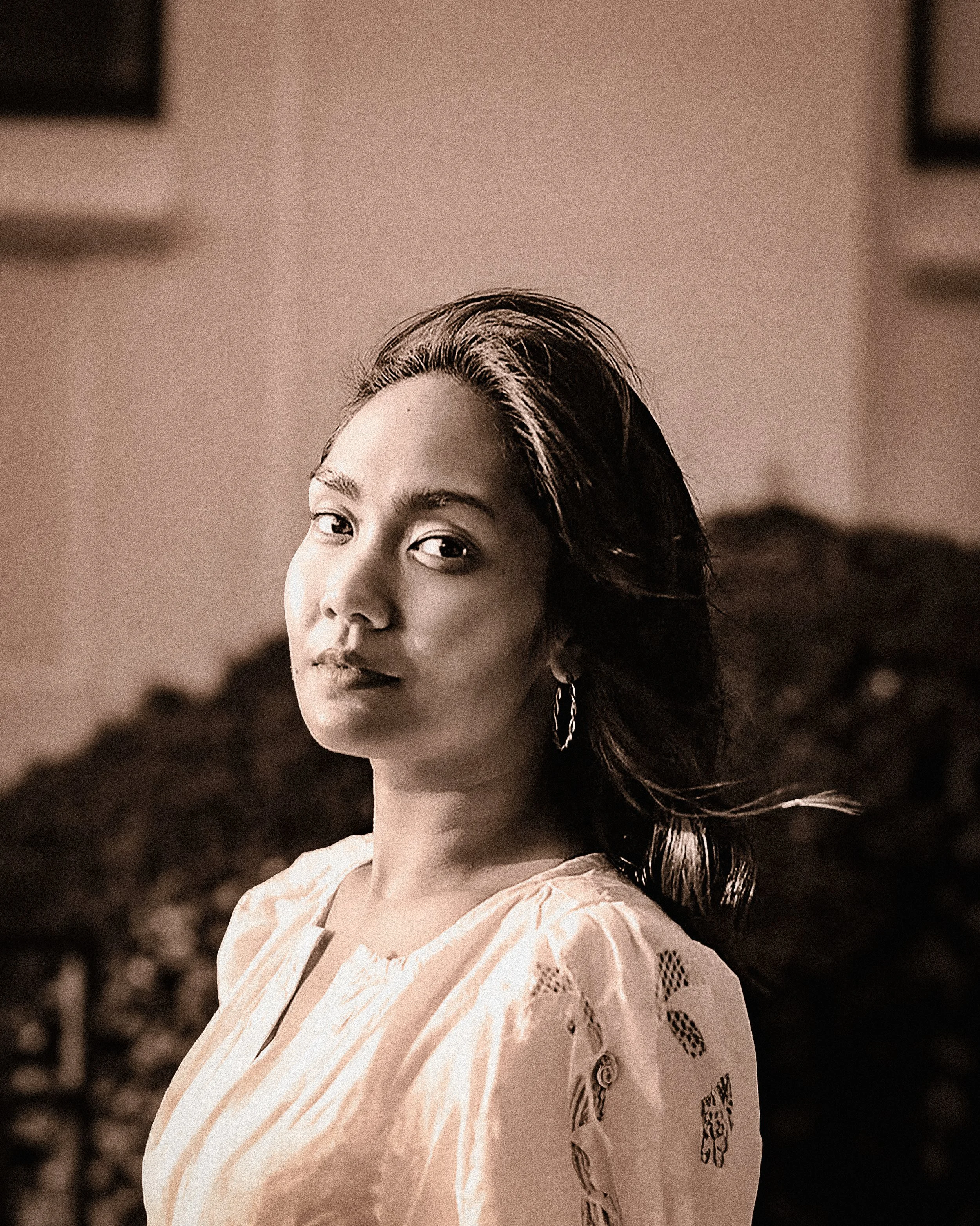
JANE BARMORE
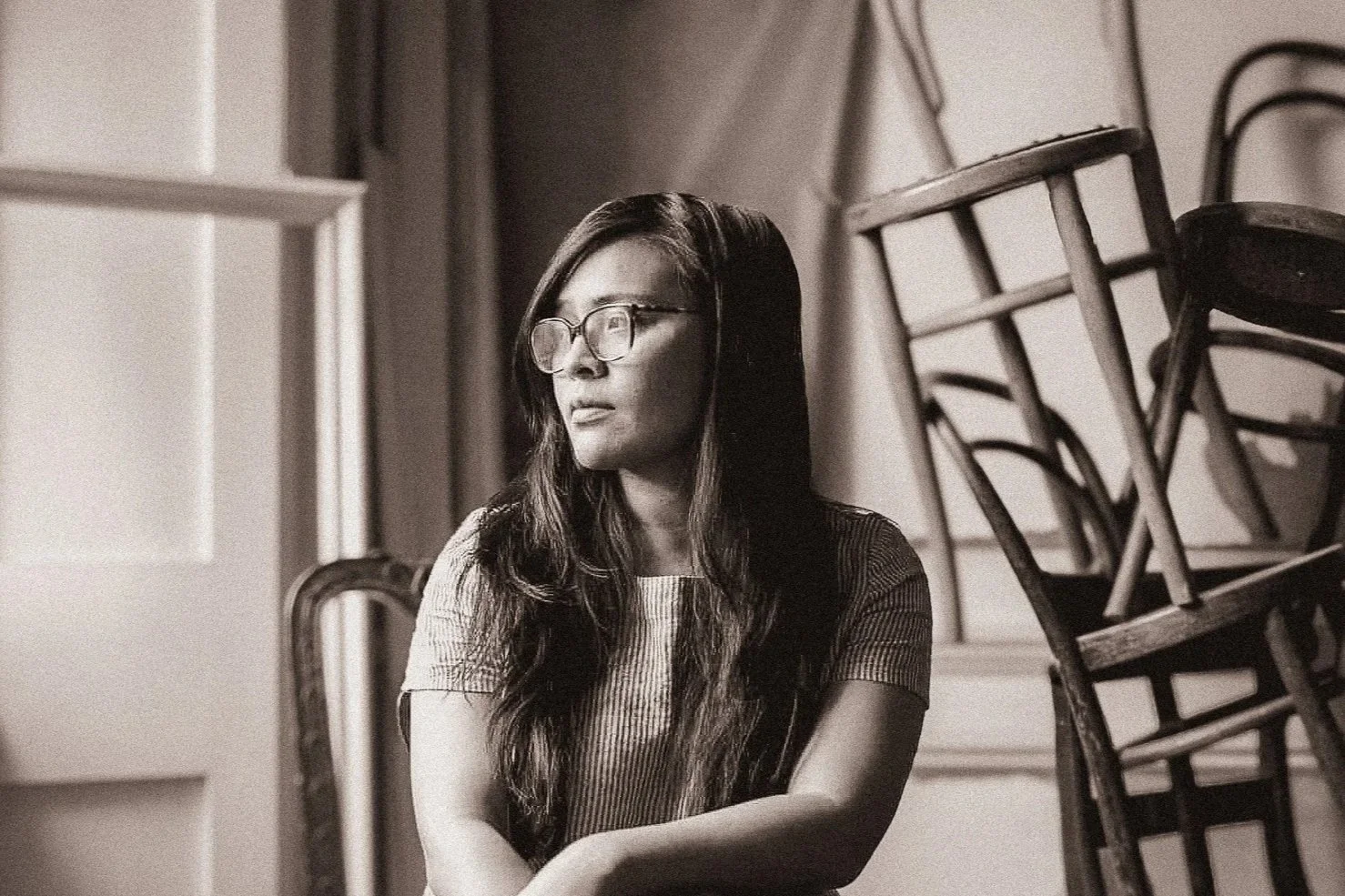
CELESTE NOCHE
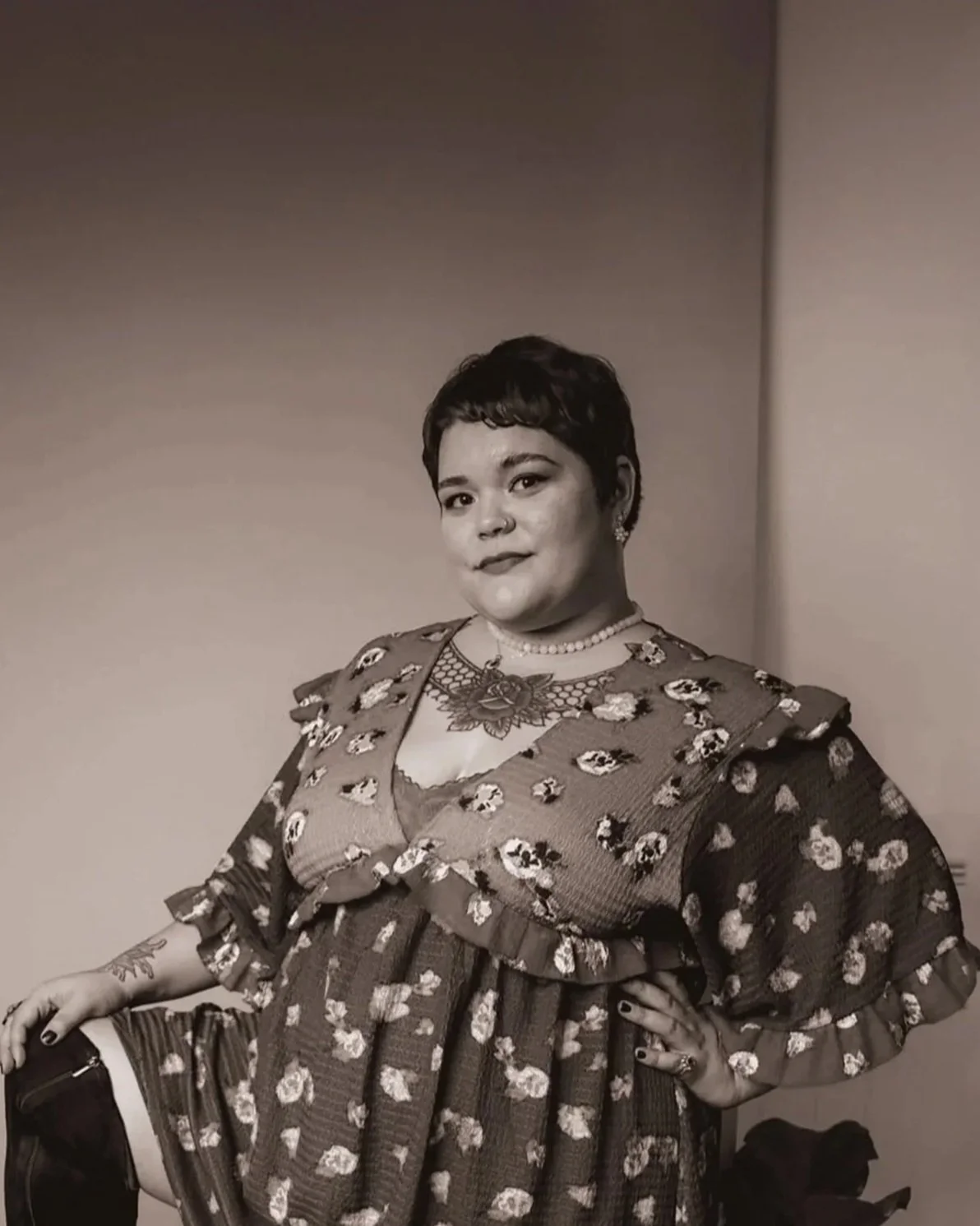
JESSICA MOSS
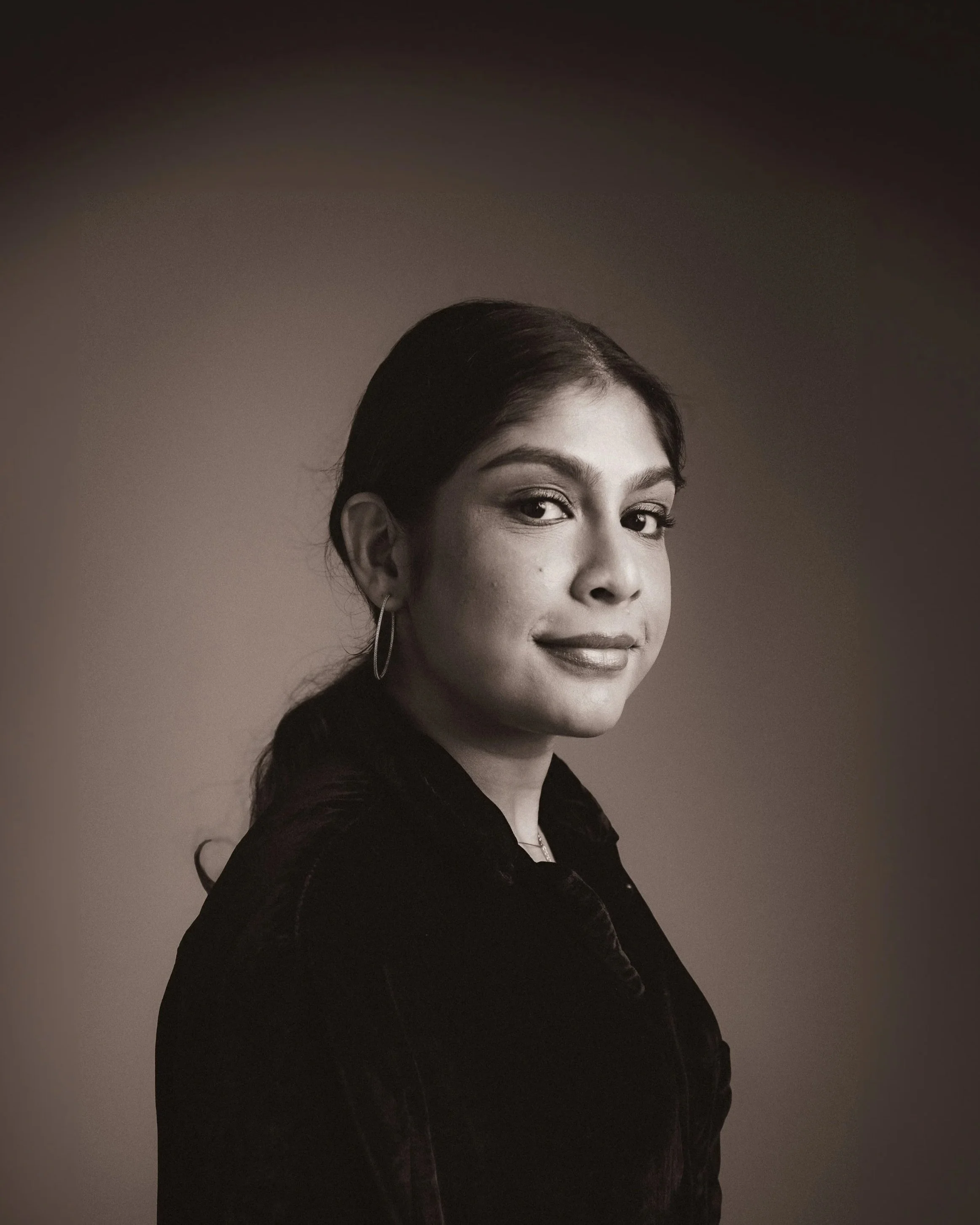
AKILA STEVENS

ANTONIO LEIJA

MADISON MEYERS
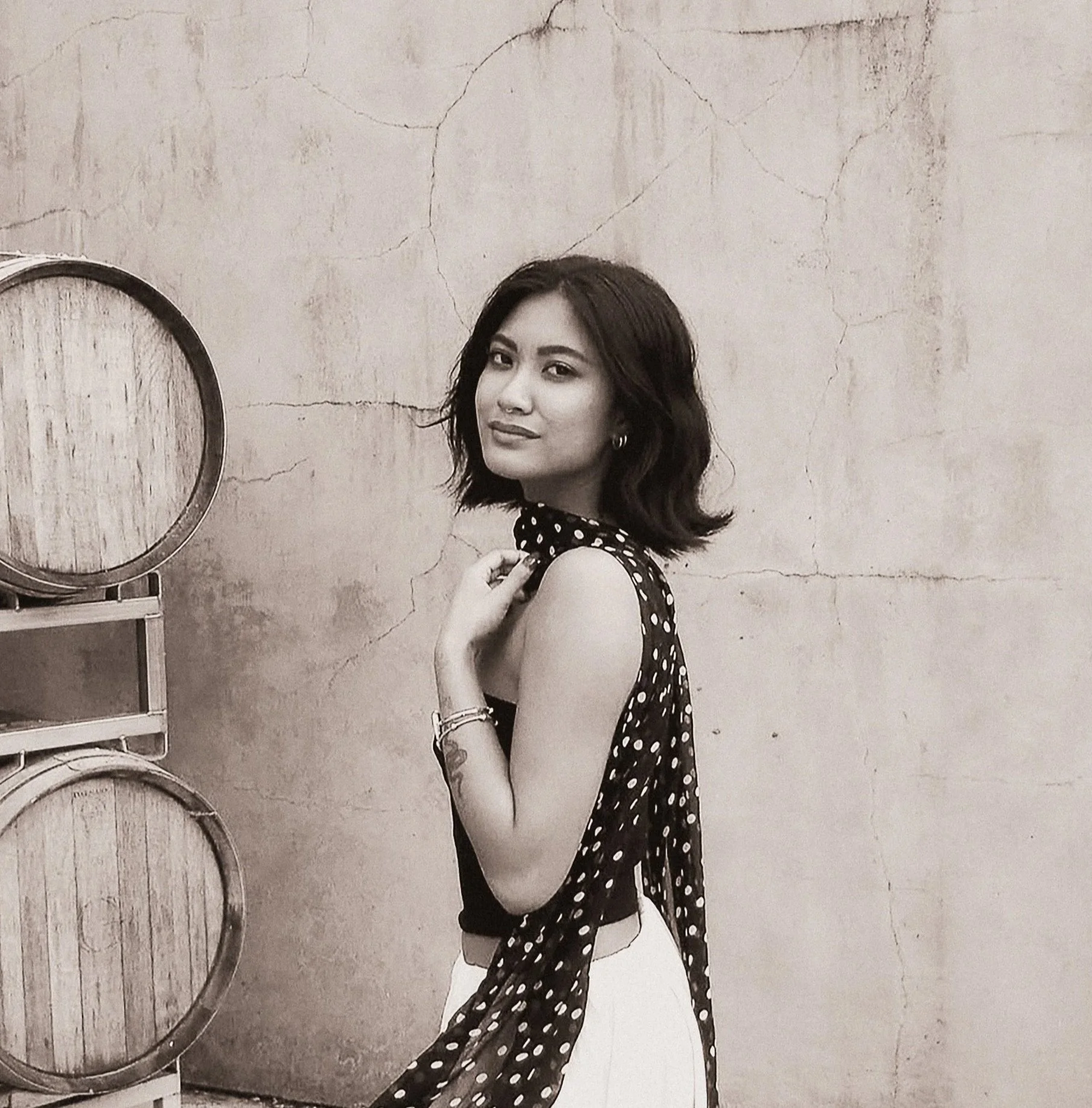
ALEXA DOMENDEN