Rafael Manuel's Filipiñana, the Philippines' submission to the Academy Awards, takes place on a perfect golf course outside Manila. Its director explains why that's the most unsettling place he could have chosen.
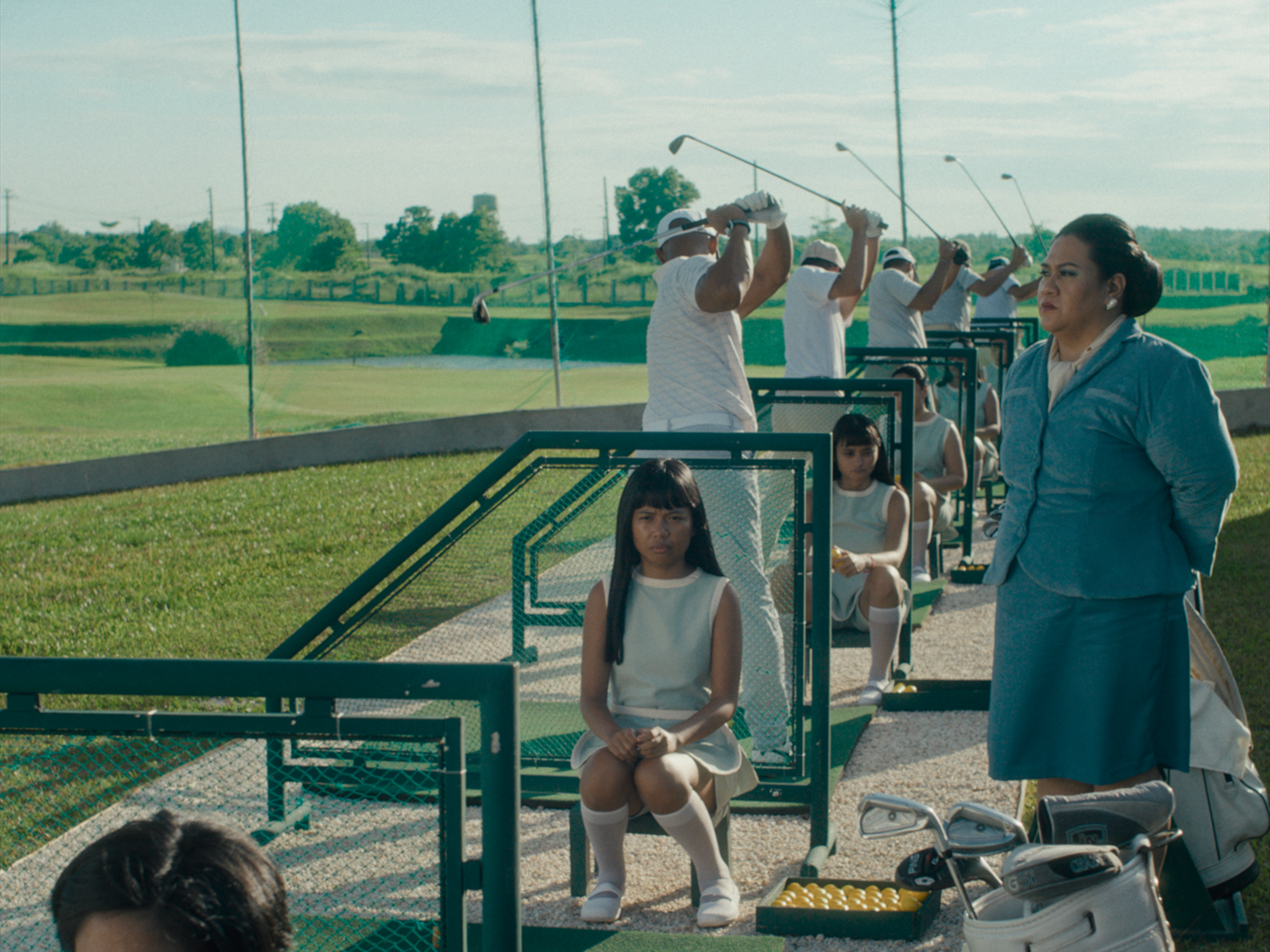
Filipiñana follows Isabel, a 17-year-old from the rural north of the Philippines who works as a "tee girl" at an exclusive country club, setting up golf balls for powerful men. Between shifts, she wanders the immaculate grounds, and the deeper she goes, the more she uncovers about the club, her country, and her own past.
The film won a Special Jury Award for Creative Vision at Sundance and the New Directors Award at SFFILM, and it's Manuel's first feature, developed with his mentor, the Chinese director Jia Zhangke. Ahead of DIWA's screening on October 25, here's what Manuel shared about making it, in his own words.
A golf course as a portrait of a country
INTRO: Golf isn’t something one thinks of in conjunction with the Philippines… certainly not with violence.
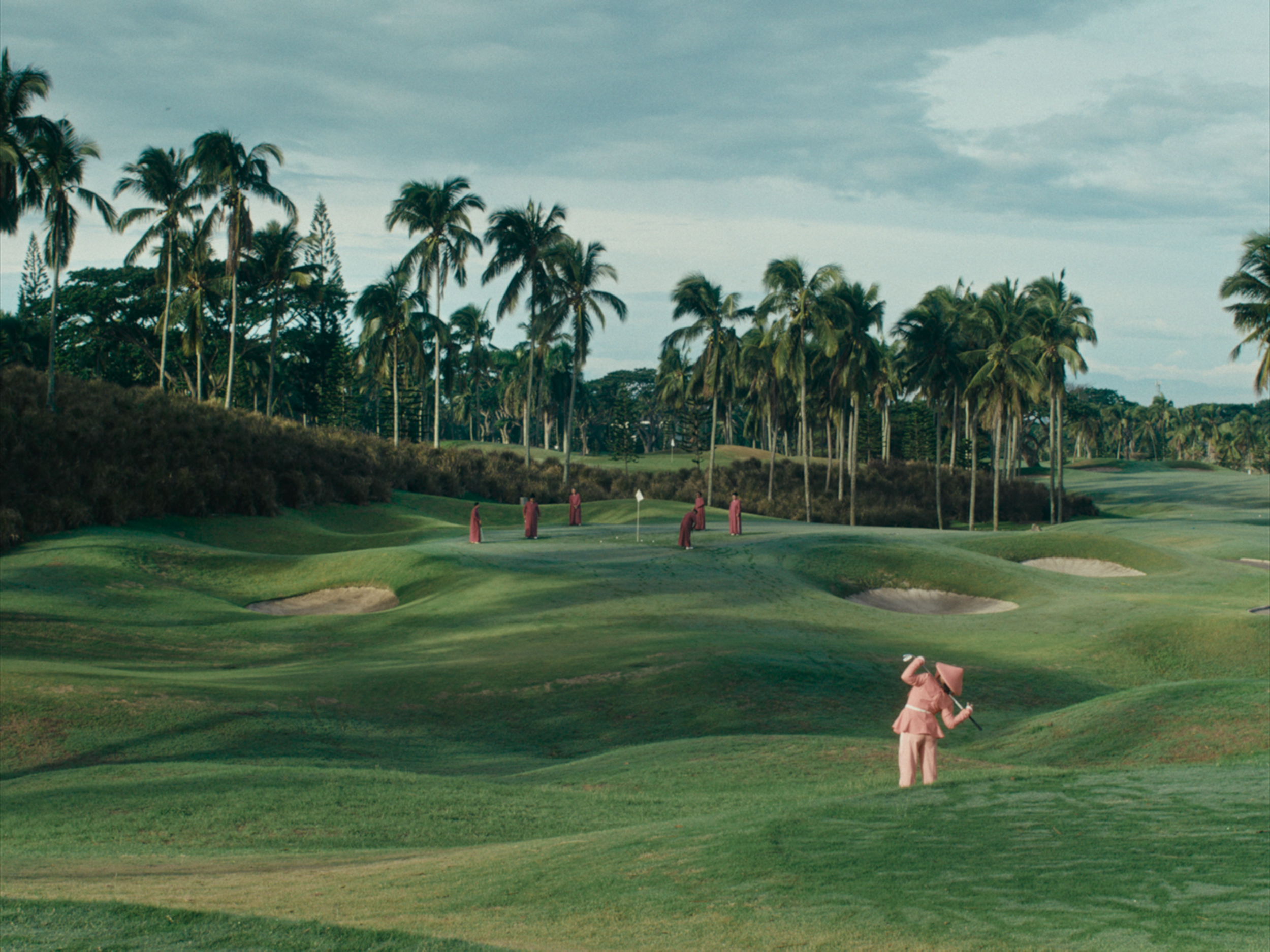
There are about 30-40 golf courses in and around Manila. To my mind, a golf course is the perfect metaphor for my country — in that it's a very large and fertile plot of land that's toiled and worked on by so many people, but ultimately, enjoyed and profited from by only a privileged few. By setting my story on a golf course, and situating the violence in a more innocuous setting, it becomes more relatable for an outside audience.
The violence you don't see
Q: There isn’t a lot of actual violence shown in your movie. Was this intentional?
A: There are two kinds of violence, objective and subjective, and if you look at how the news today tends to focus on murder, rape and crime, it’s easy for most people to observe from a distance and not feel complicit. But you don’t need to be a murderer or a criminal to be complicit in structural violence. It’s enough to live silently in an inherently violent system, as Isabel discovers in the movie.
One detail stays with you: turn up the sound of a club striking a ball by a few decibels, Manuel notes, and it starts to sound like a gunshot.
Isabel, and the north
Q: Your 17-year-old protagonist Isabel is a tee-girl at a country club outside Manila. In the movie, she’s described as Ilokana. Can you elaborate?
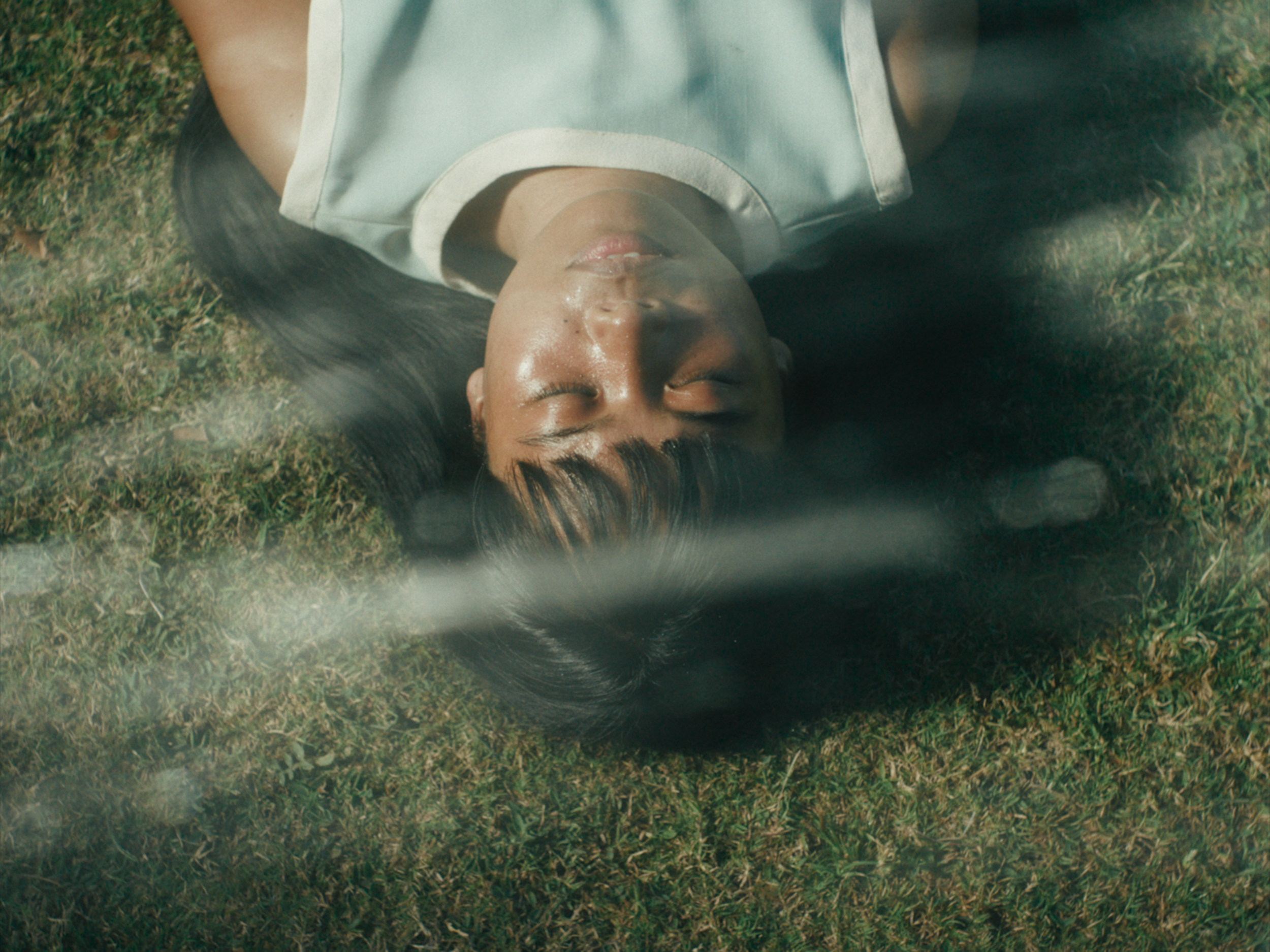
A: Ilocos is a rural northern region in the Philippines that is of immense political significance — it's where infamous dictator Ferdinand Marcos hails from. And now, less than 40 years after he was ousted from power, his son is the current president of the Philippines. Ilocos is also where Jorrybell Agoto, who plays Isabel, was born.
A country that forgets
Q: Describe the complicated dynamic between Isabel and Dr. Palanca.
A: Filipiñana is a coming-of-age story, so I wanted to set it up by focusing on Isabel developing a crush on Dr. Palanca — until she discovers painful truths about him and the club he presides over. But her growing up has a lot to do with her turning inward into her memories, which she has suppressed or long forgotten. As she learns more about the undercurrents of the club, she remembers her past in Ilocos. For me, this is representative of a malaise plaguing my country — we have a short collective memory, represented by the fact that less than 40 years after the Marcos family were ousted, they are now back in power.
It's a theme close to DIWA's own reason for being: some stories are too important to lose.
Still living in colonialism
Q: There is no sense of specific time in this movie — there’s little technology or temporal cues… is this intentional?
A: The country club in the film is a place that’s stuck between past, present and future. The golf course is another metaphor for that. You could view the film as a period piece if you wanted to. I was very conscious in trying to obscure the temporal setting because people are so quick to discuss post-colonialism in the context of Filipino society — but that doesn’t make sense to me, because we are still living in colonialism, especially in the Philippines.
Q: One of the many metaphors on display in this movie is a dying tree. Can you discuss?
A: The dying tree, which is uprooted and replaced over the course of the movie, is a pine tree, which is not native to the Philippines — the Americans brought them over, like they did the golf course. In the movie, Isabel is forced to move to Manila from her rural town in Ilocos because there are no jobs. Conversely, Clara leaves the Philippines for America — it’s all speaking to the globalization of the world.
Power, framed vertically
Q: In the movie, you explore the hierarchal and patriarchal structure of these spaces; this is a story of masculinity at the top, and subservience down below.
A: In the film, the country club members are presented very high in the frame, while the workers are shown very low, looking up. The specific image of Isabel filmed through Dr. Palanca’s legs teeing balls while he hits them on a driving range was the genesis of the entire project. If we’re talking about the hierarchy of the country club, that’s why we chose a 4:3 aspect ratio, because it contradicts what you think about a golf course and its vast, widescreen expanses. What you lose in width, you gain in verticality — by taking out the width, you’re using more of that verticality in the frame. And verticality is a good instrument for demonstrating power.Song and dance as escape
The film breaks into music and movement, which Manuel credits to the Filipino people themselves, and to the French filmmaker Jacques Tati.
Q: You also make time for music and dance interludes. Discuss the importance of these scenes.
A: My influence for the musical scenes is very much the Filipino people — if you go to my country, you’ll notice everyone singing and dancing in the streets — the harder a person works, the more they sing and dance. This sort of escapism is ingrained in the Filipino people. There’s a joke that we love karaoke so much that it’s a national sport. I’m also influenced by the films of Jacques Tati, who used synchronized movement to illuminate the absurdity of modern life. The movement sequences in the film are an extension of that. Everything is hyper performative in these kinds of spaces, whether it’s the country club members and the way they have to behave in polite society, or the workers, who are obligated to appear a certain way in front of the members.
Dressing the club
The costumes are by Carla Villanueva, a Manila stylist with more than a decade in editorial work. She also founded Baúl, a brand known for handwoven bags made in prison as part of a program supporting rehabilitation through craft.
Keep reading
If Filipiñana leaves you wanting more, these books and one film explore the same ground: power and land, the north of the Philippines, and what a country chooses to remember.
Carlos Bulosan, America Is in the Heart (1946). Read it to follow young people from the rural north, like Isabel, all the way to America’s farms in the 1930s, and to see where much of Filipino America began.
Elaine Castillo, America Is Not the Heart (2018). Read it for the question the film leaves open: what happens when someone tries to start over far from the place, and the past, that shaped them.
Jessica Hagedorn, Dogeaters (1990). Read it for another view inside Manila’s world of privilege, and the lives of the people who serve it.
Renato Constantino, The Miseducation of the Filipino (1966). Read it to understand the “short collective memory” Rafael Manuel describes, and how colonial schooling shaped it.
Lav Diaz, Norte, the End of History (2013). Watch it for a slower, harder look at class and violence, set in Ilocos Norte, the same region Isabel comes from.
See it with us
DIWA's one-night screening of Filipiñana is on Sunday, October 25, at PAMANA at The Hoxton, Portland, as part of Filipino American History Month. Every seat was reserved in under a week. Interest in this film has been increasing — stay tuned for details about our next screening!
Conversation courtesy of Kino Lorber.