

What Is Filipiñana (Filipiniana)? A Guide to the Barong, the Terno, and Filipino Dress
Filipino dress, explained
At a Filipino wedding, the groom wears a barong so sheer you can see the white shirt beneath it. The matriarchs of his family arrive in a terno with sleeves that stand up from her shoulders like folded wings. A cousin in her twenties shows up in a cropped piña top and wide-leg trousers, and somehow all three belong to the same tradition.
That tradition is Filipiñana (Filipiniana). Many don these very Filipino threads at special gatherings and formal occasions as a call back to Filipino culture but few people can explain exactly what it means, where it came from, or why a dress with butterfly sleeves became a symbol of a nation.
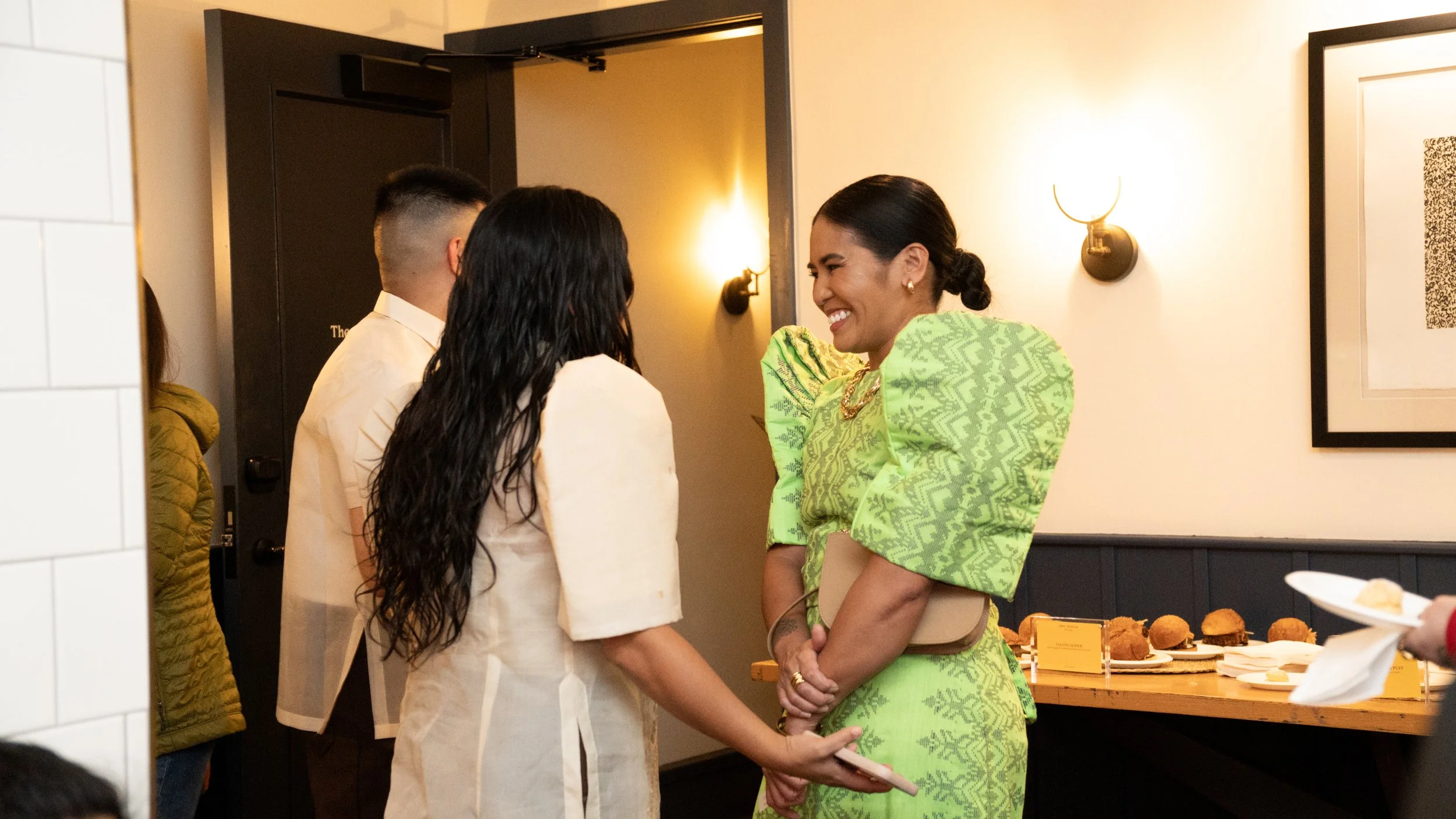
DIWA Co-Founders Kyle Beltran and Kat Magsaysay and guest Susan Agudo at DIWA Prologue: Ephemerality event on October 10, 2025.
What Filipiñana means
Filipiñana is the umbrella term for traditional Filipino formal dress for men and women. It covers the baro't saya, the Maria Clara gown (also called the traje de mestiza), the terno, and the barong tagalog.
The word itself simply means "things Filipino," which is why you'll also see it on library shelves of Philippine books and art. In fashion, it has come to mean dress that is recognizably Filipino in its silhouette, fabric, or craft. Think sheer pineapple-fiber cloth, hand embroidery, and those unmistakable butterfly sleeves.
Filipiñana is the category; the terno, the barong, and the rest are specific garments within it.
A glossary of Filipiñana
-
A loose upper garment, or shirt. Before the Spanish arrived, both men and women wore a collarless baro, often woven from native fibers like abaca.
-
"Blouse and skirt." The two-piece ensemble at the root of women's Filipiñana.
-
The blouse of the baro't saya, usually sheer, with wide sleeves.
-
The skirt. Often long and full, sometimes with a train called a cola.
-
A stiffened kerchief folded over the shoulders, worn with the camisa for modesty.
-
A rectangular cloth wrapped over the skirt.
-
The 19th-century, more elaborate version of the baro't saya, with camisa, saya, pañuelo, and tapis. Named after María Clara, the heroine of José Rizal's 1887 novel Noli Me Tángere.
-
From the Spanish for "matching." It first meant a matched blouse and skirt, and evolved into the one-piece dress defined by butterfly sleeves.
-
Stiff, upright sleeves flattened against the shoulders like folded wings. The single most recognizable element of Filipiniana.
-
A short, sheer blouse worn in the Visayas, often with a patadyong.
-
The men's formal shirt: sheer, embroidered, worn untucked. The name comes from baro ng Tagalog, "dress of the Tagalog." Often shortened to barong.
-
A fine, sheer cloth woven from pineapple-leaf fiber, most famously in Aklan.
-
A crisp, semi-sheer cloth, historically a silk and banana-fiber blend, now usually silk or synthetic blends.
-
Delicate open-work hand embroidery, the signature of barongs and camisas.
How Filipino dress became Filipiñana
Filipiñana took shape over four centuries, as each era layered something new onto what came before.
Before 1521
Long before the Spanish arrived, people across the islands wore a simple baro over the body and wrapped cloth below, woven from abaca and other native fibers. Status showed in gold ornaments and, in the Visayas, in tattoos that covered the body. Those tattoos are why the Spanish later called the region the Islas de los Pintados, the islands of the painted ones.
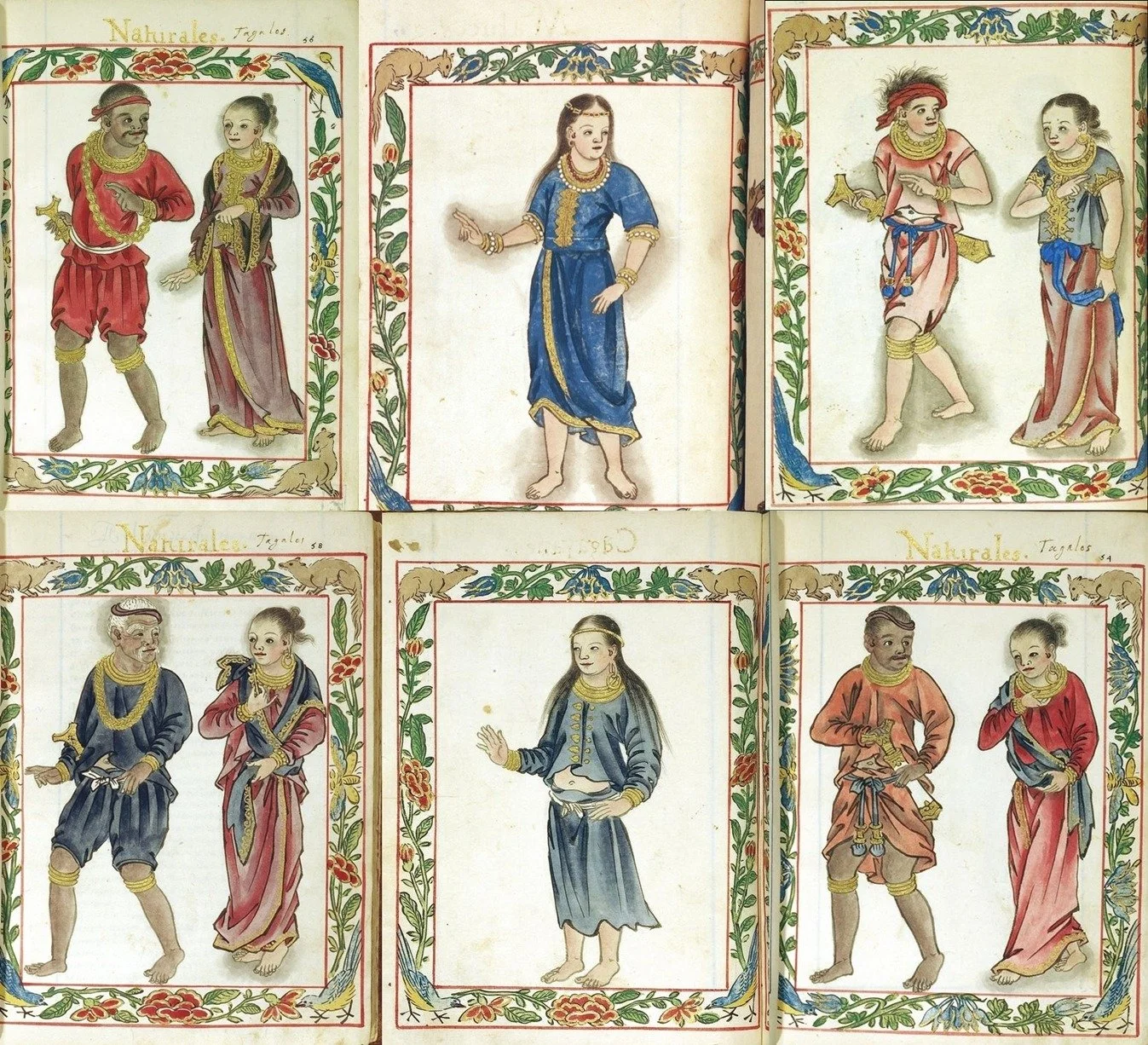
The Boxer Codex (c. 1590) is a late-16th-century Spanish manuscript—housed at the Lilly Library at Indiana University—that contains 15 full-page colored illustrations dedicated to the pre-colonial indigenous peoples of the Philippines.
The Spanish era: the baro't saya
Under more than three centuries of Spanish rule, Catholic ideas of modesty met a hot, humid climate, and the baro't saya emerged. The camisa stayed light and sheer for the heat, while the pañuelo covered the shoulders and the saya reached the floor.
The islands' fabrics became prized far beyond them. Piña, woven from pineapple fiber, was a luxury export that European aristocrats coveted in the 18th and 19th centuries.
The Maria Clara gown
By the 19th century, a growing class of wealthy Filipinos and mestizos turned the baro't saya into something grander: the traje de mestiza. Sleeves grew wider and bell-shaped, skirts fuller, embroidery more elaborate.
It took its popular name from María Clara, the heroine of José Rizal's Noli Me Tángere, written as an idealized portrait of a modest, devout Filipina. The gown and the ideal became linked, and the name stuck.
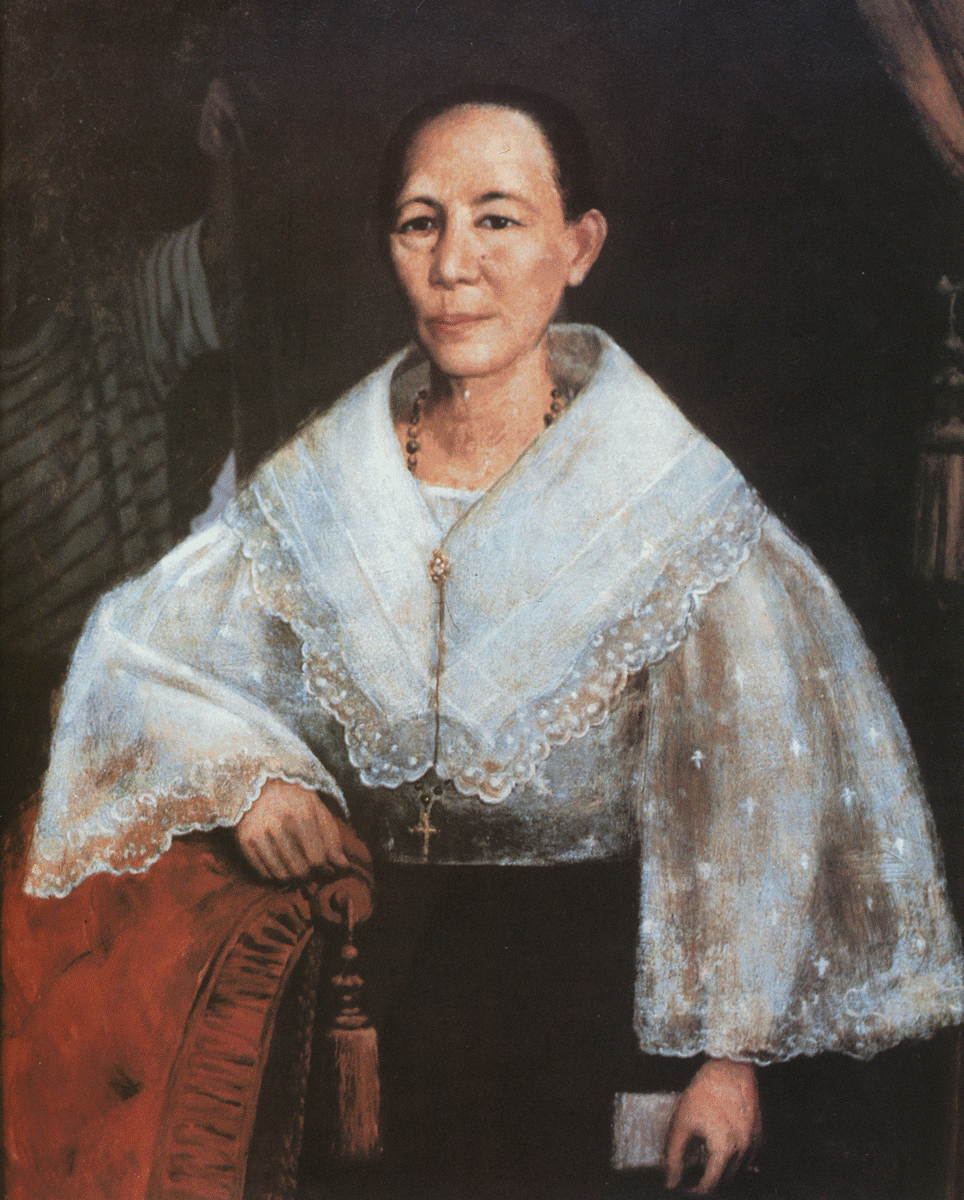
This portrait depicts a 19th-century Filipino woman wearing a traditional traje de mestiza, later widely known as the Maria Clara dress.
The American era: the terno
In the early 1900s, as the Philippines passed from Spanish to American rule, Western fashion changed what women wanted from formal dress. "Terno," meaning matching, first described a camisa and skirt made in the same fabric or embroidery.
The sleeves began to flatten against the shoulders, standing upright like folded wings. Once they did, the pañuelo became awkward to wear, and it fell away. Over the following decades, the blouse and skirt joined into a single dress.
The modern terno
By the late 1940s, terno could mean almost any Western-style dress with butterfly sleeves attached. In the 1950s, designer Ramón Valera reworked how the sleeves were built, adding a stiff support inside to create the clean, sculptural butterfly sleeve recognized today. Detachable sleeves followed, and designers began pairing them with silhouettes from abroad, with the sleeves alone signaling that a dress was Filipino.
The barong's story
The barong grew from the same baro. Over the colonial period, it became the formal shirt of Filipino men, sheer and finely embroidered.
A popular story holds that the Spanish required the barong to be sheer and untucked so the men wearing it couldn't hide weapons. Historians have found no law requiring that, and the sheer fabric suits the heat far better than any rule would explain.
The barong's modern status came after independence. On December 30, 1953, Ramón Magsaysay became the first Philippine president to wear a barong at his inauguration, and he wore it almost everywhere afterward. In 1975, Ferdinand Marcos issued a proclamation naming the barong tagalog the national attire.
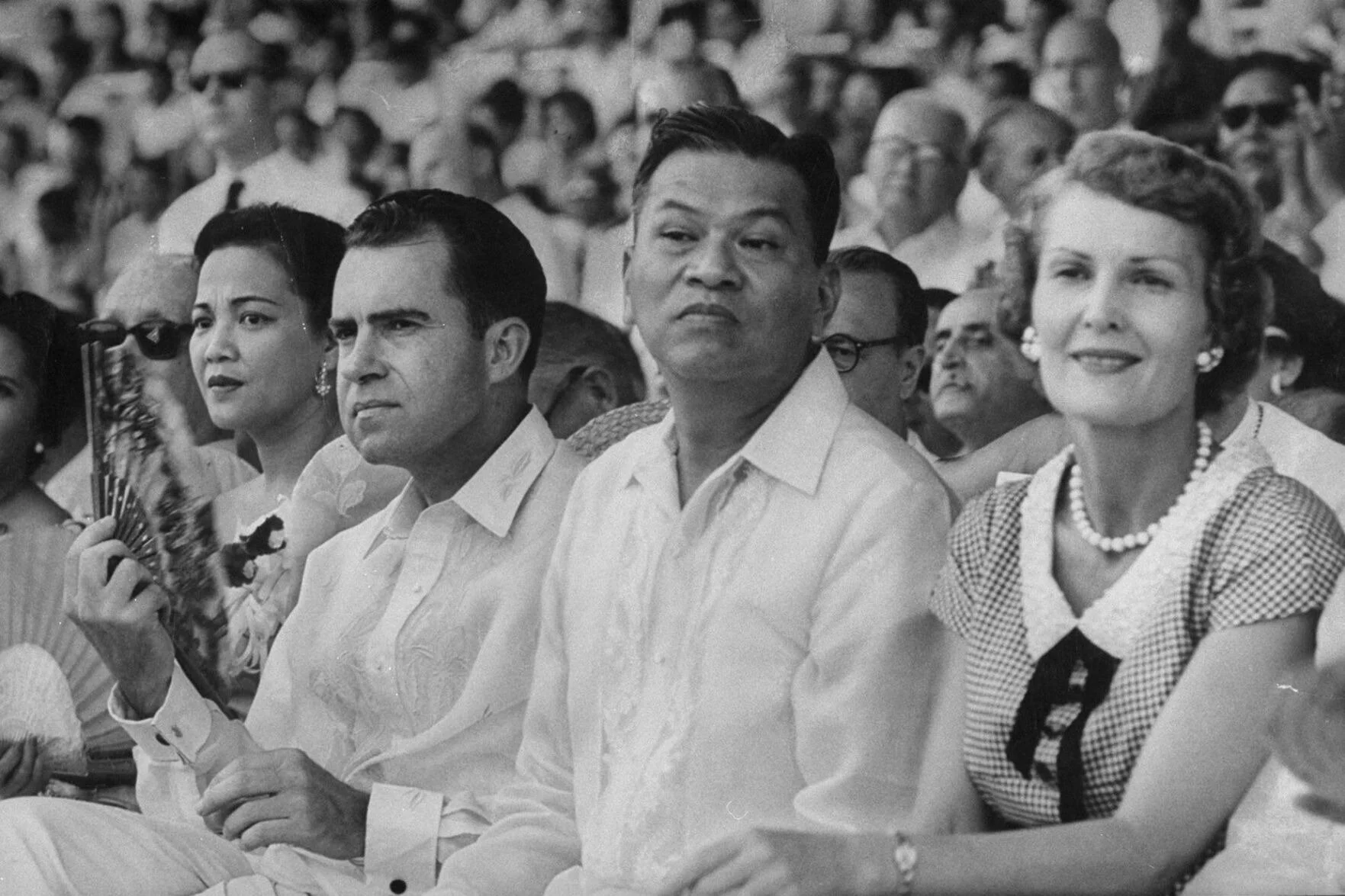
U.S. Vice President Richard Nixon and Philippine President Ramon Magsaysay seated side-by-side wearing traditional barong tagalog shirts, flanked by First Lady of the Philippines Luz Magsaysay and Second Lady of the United States Pat Nixon, during July 4th Independence Day celebrations in Manila in 1956.
Filipiñana now
Today, a new generation of designers is treating Filipiñana as a living language: piña cut into everyday shirts, butterfly sleeves on modern gowns, and barongs that look as at home in a gallery as at a wedding. Competitions like TernoCon have helped make the terno a stage for new ideas, and Filipino Americans now wear Filipiñana far beyond formal occasions.
The cloth and the needle
What makes a garment Filipiñana often has less to do with its shape than with how it was made.
Piña. In the province of Aklan, weavers scrape pineapple leaves by hand to pull out fibers fine enough to weave into a sheer, stiff, faintly lustrous cloth. The process is slow and painstaking, passed down within families. In 2023, Aklan's piña handloom weaving was inscribed on UNESCO's list of the Intangible Cultural Heritage of Humanity, the first such tradition from the Visayas.
Jusi. Crisp and semi-sheer, jusi was historically woven from silk and banana fiber. Most jusi today blends silk with synthetics, which makes it the more affordable choice for a first barong.
Calado and embroidery. Woven piña travels from Aklan to embroidery towns like Lumban in Laguna and Taal in Batangas, where artisans add calado (delicate open-work) and sombrado (shadow work). Each piece can pass through several hands, from the designer who traces the pattern to the embroiderers who specialize in a single technique.
When you see the price of a hand-embroidered piña barong, you're seeing many hours of skilled work by weavers and embroiderers, in crafts that go back generations.
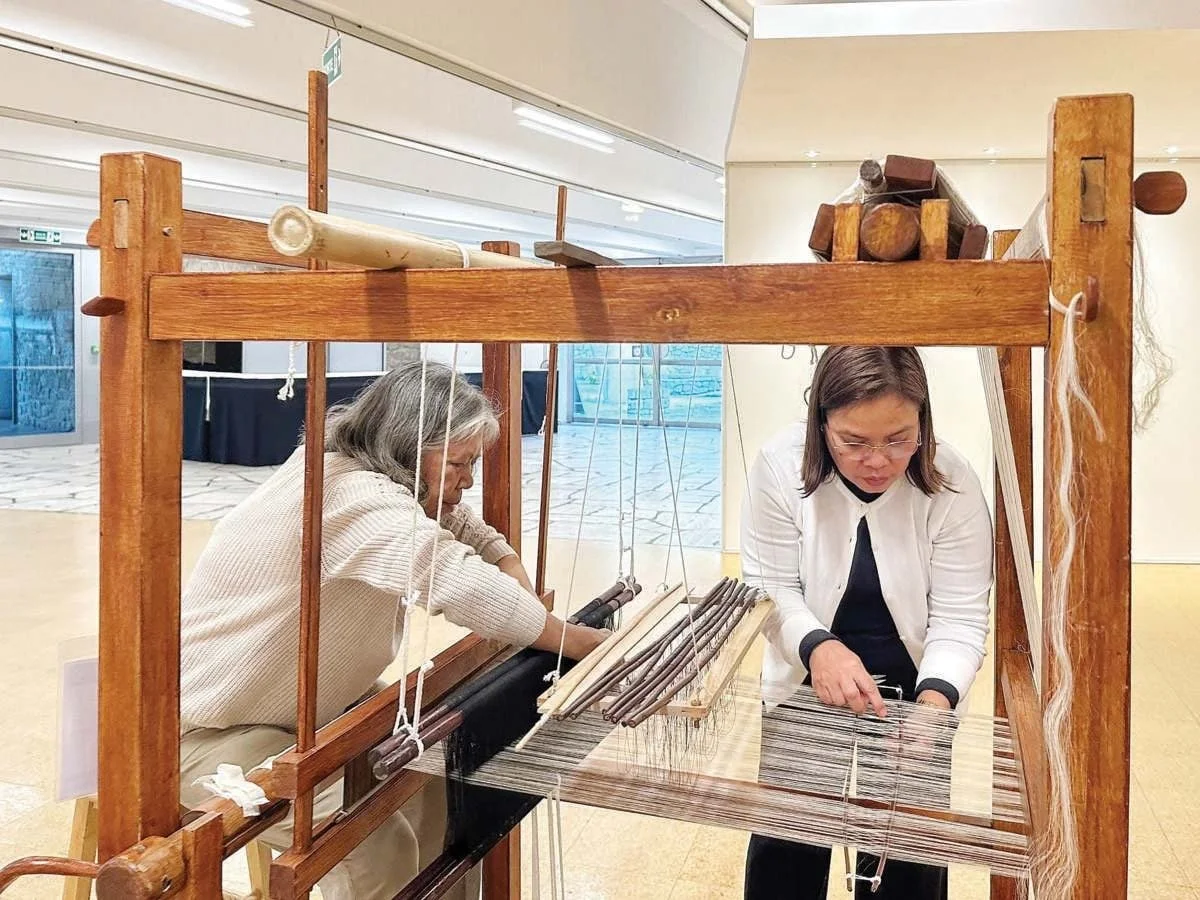
The Aklan Piña Museum and Cultural Center serves as a dedicated space to safeguard and promote the centuries old tradition of Aklan piña handloom weaving.
When Filipiñana is worn
In the Philippines
Weddings: the groom, the fathers, and the principal sponsors often wear barongs; brides and mothers may choose a terno or a modern Filipiñana gown.
State occasions: the barong is standard for official events, and ternos appear at formal gatherings like the State of the Nation Address.
Buwan ng Wika: schools celebrate Filipino Language Month each August with Filipiñana days.
Independence Day (June 12) and other national celebrations.
Cultural performances: folk dance and theater, where the Maria Clara gown and kimona still appear.
In Filipino America
Weddings and debuts: a barong for the groom and sponsors, a terno-inspired gown for the debutante's grand entrance.
Filipino American History Month in October, and galas, screenings, and cultural nights throughout the year.
Campus culture nights: Filipino student associations' annual shows, where many people wear Filipiñana for the first time.
Everyday style: a piña shirt to work, a barong over jeans, butterfly sleeves on a dinner dress.
A note on dress codes: when an invitation says "Filipiñana," it usually means a barong for men and a terno, baro't saya, or a dress with a recognizably Filipino element for women. Many hosts welcome modern interpretations. Wear what makes you feel connected, and if you're unsure, ask the host.
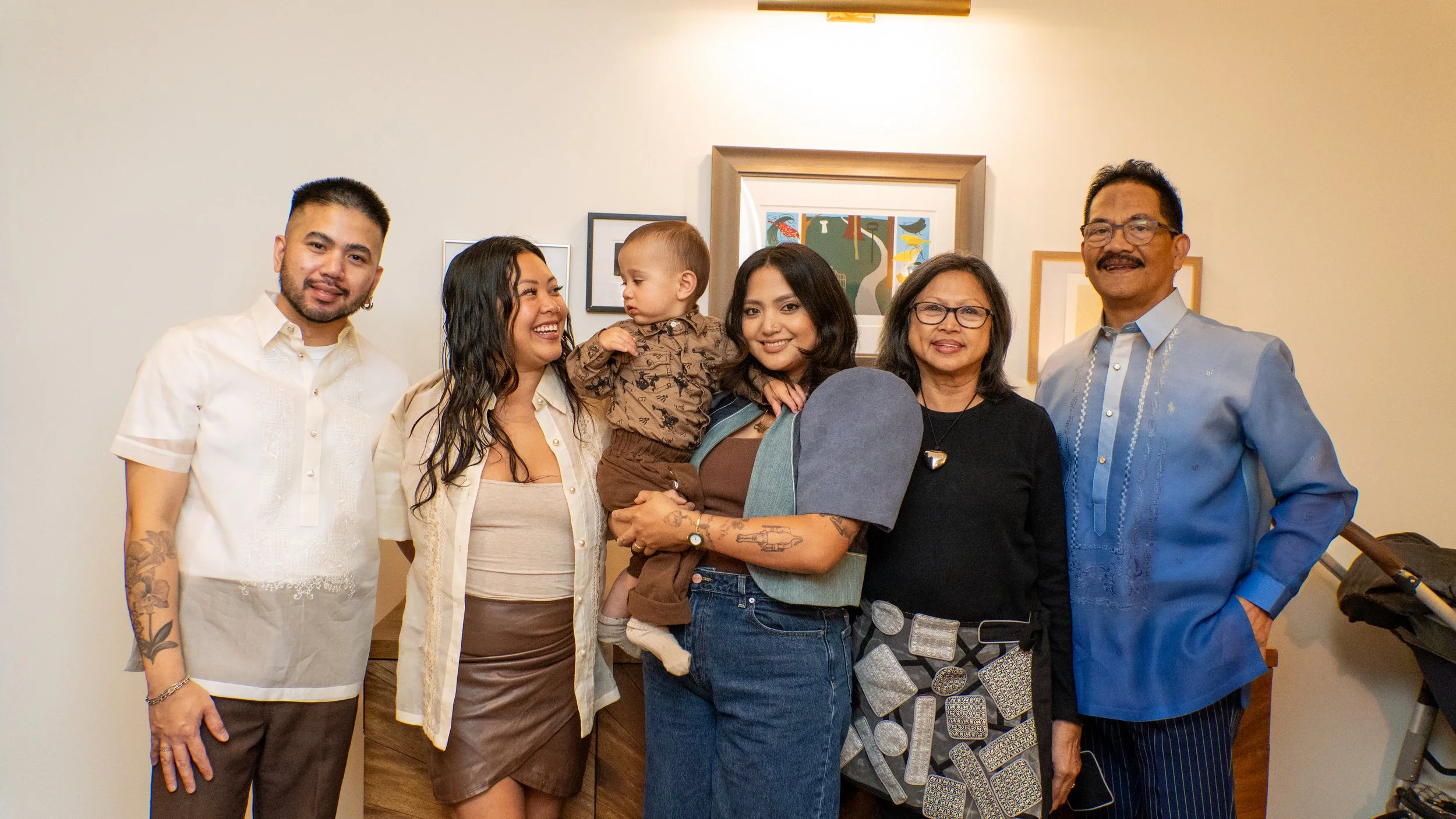
DIWA Co-Founders Kyle Beltran and Kat Magsaysay with group of guests at DIWA Prologue: Ephemerality event on October 10, 2025.
The designers reimagining Filipiniana
A new generation of Filipino designers is proving that Filipiñana belongs to the present. Three to know:
Kelvin Morales
Manila-based Kelvin Morales graduated from De La Salle–College of Saint Benilde in 2018, and his graduation collection put him on the industry's radar. He's best known for an experimental take on the barong tagalog: relaxed silhouettes, deconstructed tailoring, and embroidery that ranges from delicate to darkly surreal. One collection explored the idea of skin itself, with tattoo-inspired embroidery and sheer fabrics. His work leans on local artisans and textiles, and in 2026 his studio introduced Aura, its first womenswear collection.
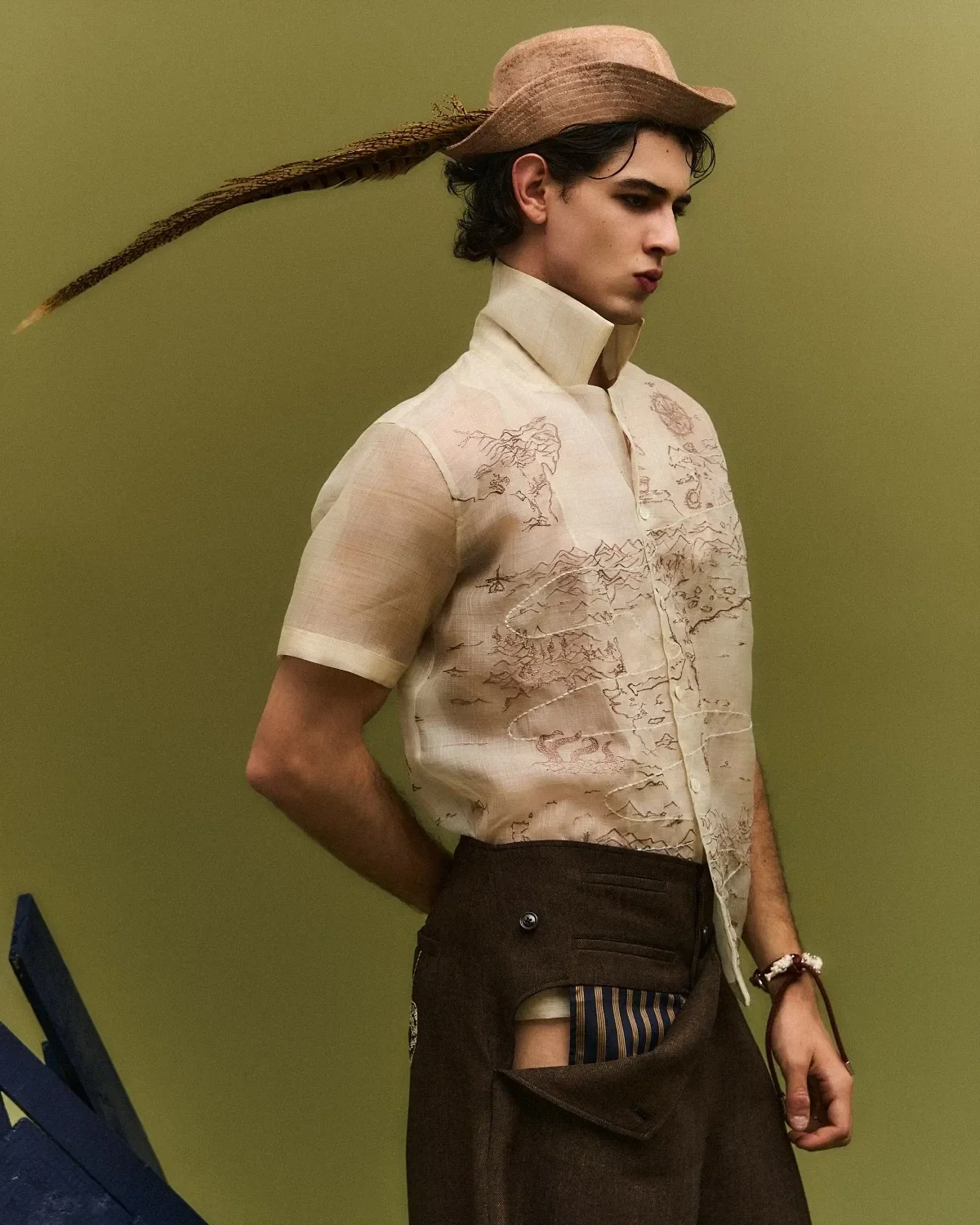
Filipino designer Kelvin Morales unveils his collection titled “Pirate Bae'“ which is inspired by identity, nostalgia, and existence.
Ched Studio
Designer Christian Edward Dalogaog founded Ched Studio in Manila, built on an artisanal approach that fuses Filipino craftsmanship with references from art, history, and pop culture. Signatures include his "everyday barong" and piña apron tops, made to be worn far beyond formal occasions. In 2017, Vogue Italia's talent program brought his first ready-to-wear collection to Milan Fashion Week. Ched Studio has since joined Rustan's department store and returned to Milan to exhibit at the Fondazione Sozzani.
Peach Garde
Peach Garde is the label of Peter Gagula, a designer from the Western Visayas whose collections build on piña and other locally woven fabrics, with inventive embroidery, strips, and panels. In 2025, he won the top prize at TernoCon with a collection inspired by National Artist Leandro Locsin's buildings, and he was named a winner of the Bench Design Awards. His work shows how a younger generation is making Filipiñana feel modern, wearable, and fresh.
Wear it your way
From cultural assimilation to Catholic syncretism, the people of the Philippines have always tended toward resiliency, even in their dress. Filipiñana is a symbol of how Filipino culture has evolved over the centuries. What was once a sheer shirt woven from native fiber became the barong; a blouse and skirt became the Maria Clara, then the terno; butterfly sleeves went from a detail to a national symbol. Every generation has added its own chapter, and this one is no different.
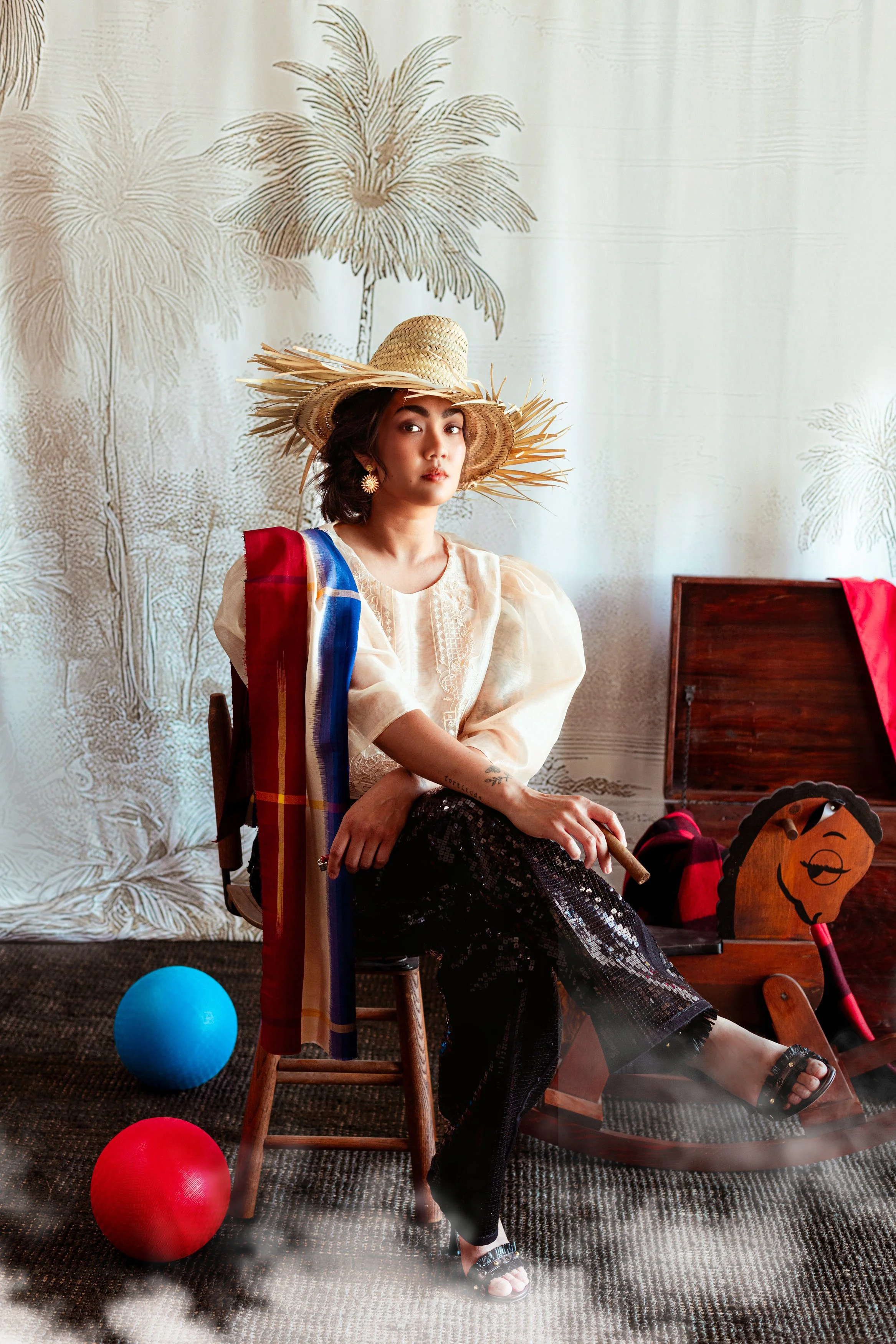
Creative collaborator and model for DIWA’s Prologue: Ephemerality photoshoot poses for the camera on set.
So wear the barong your grandfather wore, or one cut like a jacket. Wear a terno to a gala, or butterfly sleeves to dinner. Wearing Filipiñana your way is an incredible expression of what it means to be Filipino and what it means to you. Check out The DIWA Edit.
Get more stories like this. Subscribe to the DIWA newsletter
