

A note on this week: many families in the U.S. gather this Thursday for a holiday whose origin story leaves out the Native nations whose land it's celebrated on, and many in our community choose not to mark it. We'd like to spend the week on an older practice found across the islands: giving thanks for the harvest, and for the people who bring it in.
Being home in the Philippines earlier this year reintroduced me to things I had forgotten and to things I never knew, and many of them were ingredients that come from the islands themselves. I brought home salt from Bohol that locals call dinosaur egg salt, asin tibuok, boiled down and baked inside clay pots until it comes out round and gray, and asin sa buy-o, a salt made in Zambales. I tried tablea, the tablets of ground cacao melted down for tsokolate, which we never used at home, where tsokolate meant Hershey's cocoa powder. I tried every kind of coffee I could find, after learning that the Philippines is one of the few countries that grows all four main varieties: arabica, robusta, liberica, which we call barako, and excelsa. I also became obsessed with tapuey, the rice wine of the Cordillera, so much that I brought home cases of it, which are still sitting in my cupboard. It's getting a story of its own soon, along with a place at DIWA gatherings to come.
If you'd like to be there, DIWA members get first access to tickets for every gathering, and Founding Membership is open until Monday, November 30.
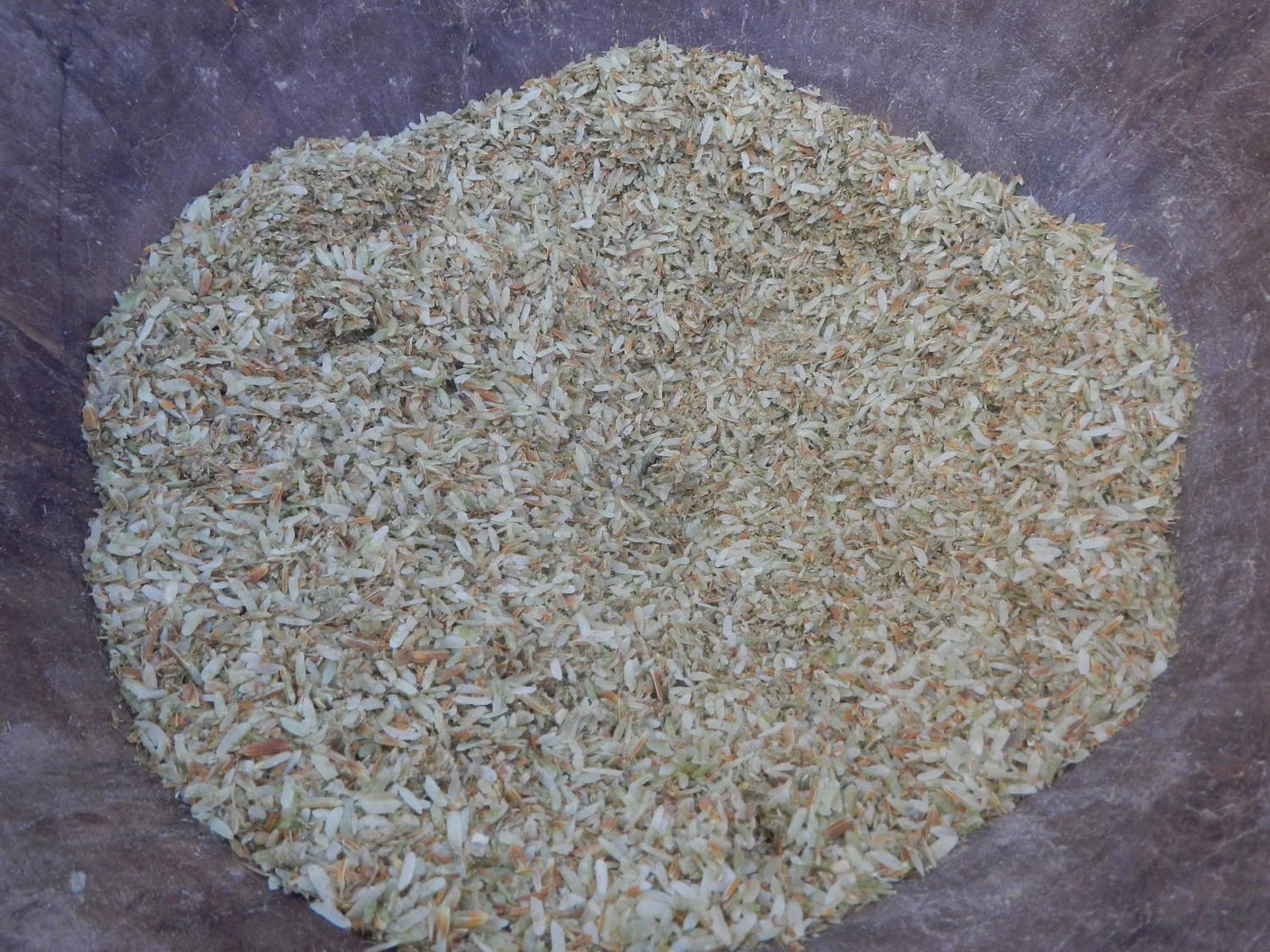
And there was one ingredient grown in my own backyard: duman, a green rice from Santa Rita, not very far from where my family lives in Lubao, Pampanga.
I looked for it in every market down the street from my family's house. When we drove around, I watched for any shop selling rice or animal feed and asked there too. I couldn't find it anywhere. What surprised me more was how few people in my family knew what I was talking about. A food grown a short drive from our house was a mystery to the people who live there.
The more I read, the clearer the reason became. Duman is made by a small number of families, by hand, for a few weeks at the end of each year, and the craft behind it is close to disappearing. It also turned out to be a harvest food, ready in the same weeks that so many communities in the islands have long set aside to give thanks for what the fields gave them. So this week, that's where our thanks is going.
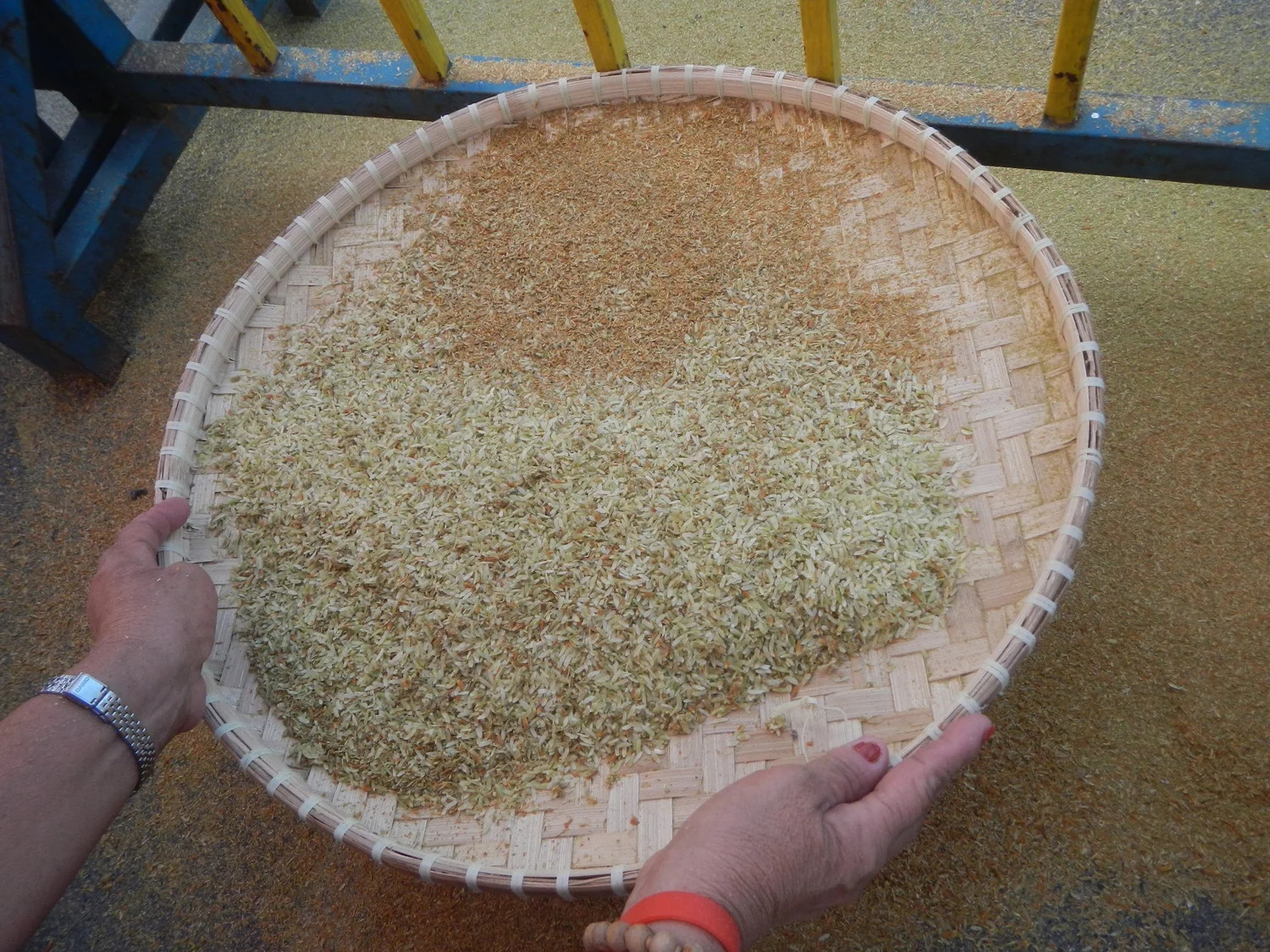
What Duman Is
Duman is young glutinous rice that is harvested while the grains are still green, then toasted, pounded, and winnowed into soft, pale green flakes. Kapampangans call it the green gold of Santa Rita. A Philstar writer once compared it to pinipig, the pounded rice of Central Luzon, though duman is pounded more lightly and stays green.
The rice comes from a glutinous variety that farmers call lakatan malutu. PhilRice, the country's rice research institute, classifies duman as a traditional rice variety, and notes one unusual trait: its grains can sprout before harvest. The process of growing and making it has its own Kapampangan name, pamagduman, and the people who do it are the magduman.
The Wind Decides When
Most rice in Pampanga can be planted and harvested more than once a year, but duman comes in only once. Farmers plant it between April and August, and then they wait for the amihan, the cool northeast wind that reaches Luzon toward the end of the year. The harvest only begins once the amihan arrives, in November and December. The farmers reap at dawn, while the air is still cold.
Giving Thanks for the Harvest
Across the Philippines, the end of a harvest has long been a time to give thanks. In Ifugao, families mark the end of the rice season with bakle, pounding glutinous rice into rice cakes and offering prayers, rice wine, and rice dough to the bulul, the carved guardian of the granary, to thank it for the harvest and ask for another. In Palawan, the Tagbanua gather after the rice harvest for pagdiwata, when a babaylan shares rice wine with the spirits in thanks. In Bukidnon, the word kaamulan means a gathering, and one of its oldest purposes is giving thanks for the harvest.
Santa Rita has its own. Every December, the town gathers for the Duman Festival to celebrate the harvest and to honor the families who turn it into duman.
How Duman Is Made
The work happens in the palbibewan, a roofed, open-sided space beside the family home, where some of the tools in use are decades old. Before the harvest, the palbibewan inspect the grains to see if they're ready. "Yumuko na ang mga bunga," one of them, Jayvie Libut, told Punto! Central Luzon in 2024: the grains have bowed.
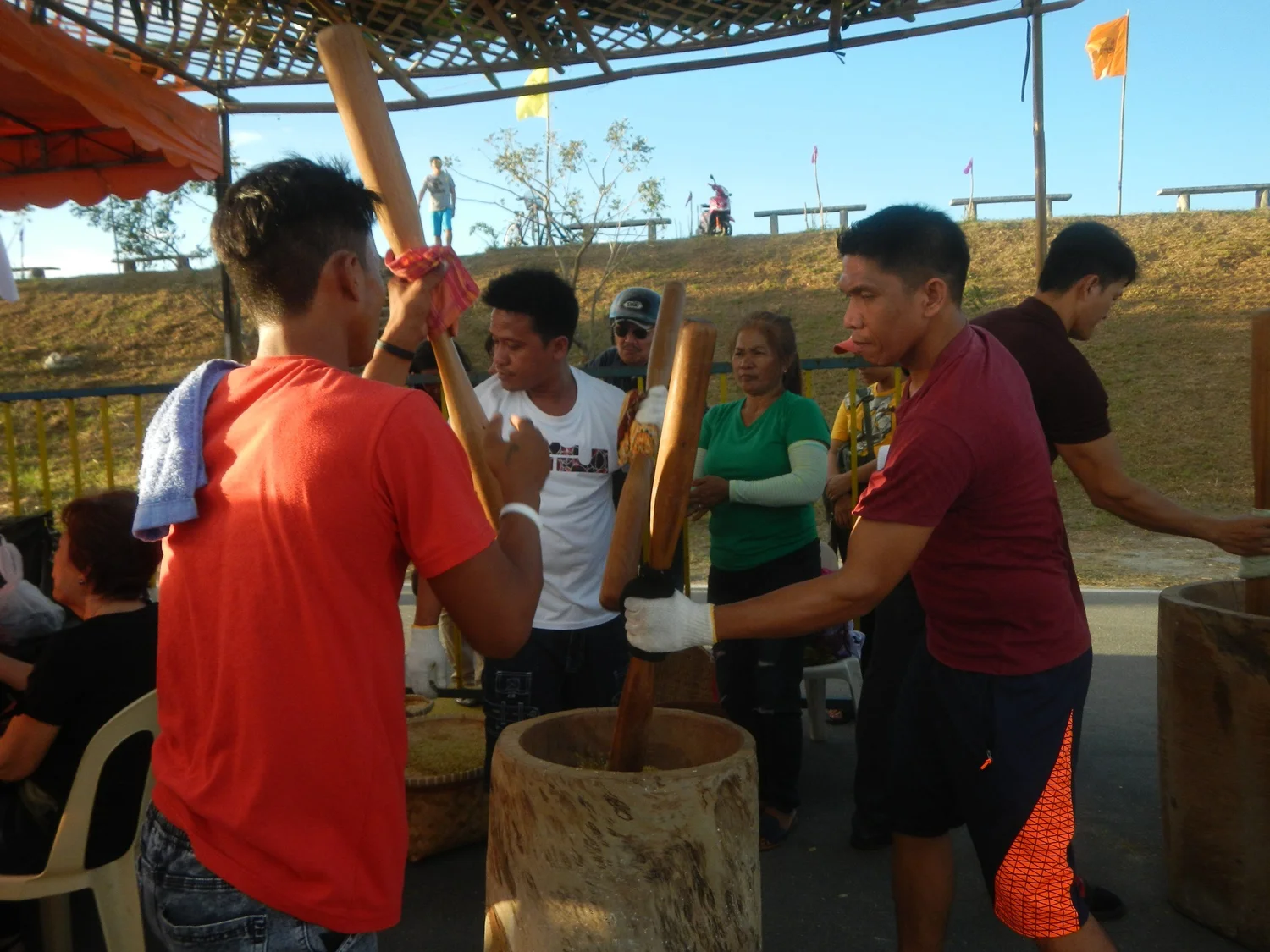
From there, the rice is threshed, sorted, and cleaned. It's roasted in batches, cooled, and pounded by hand in wooden mortars. At the 2025 Duman Festival, teams of men pounded the toasted rice in synchronized beats for about 15 hours, according to the Inquirer. The pounding, called babage, once came with music and chants.
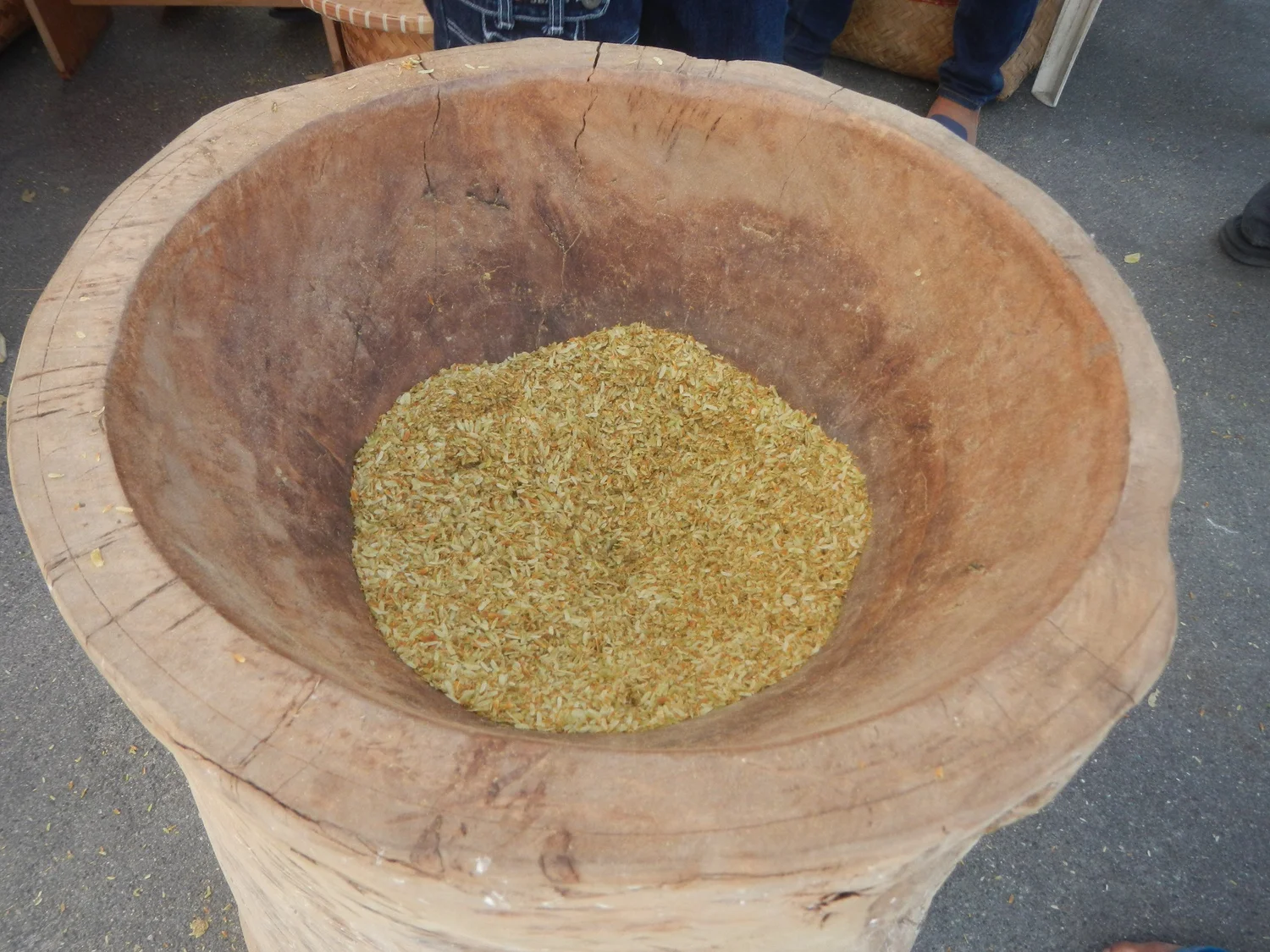
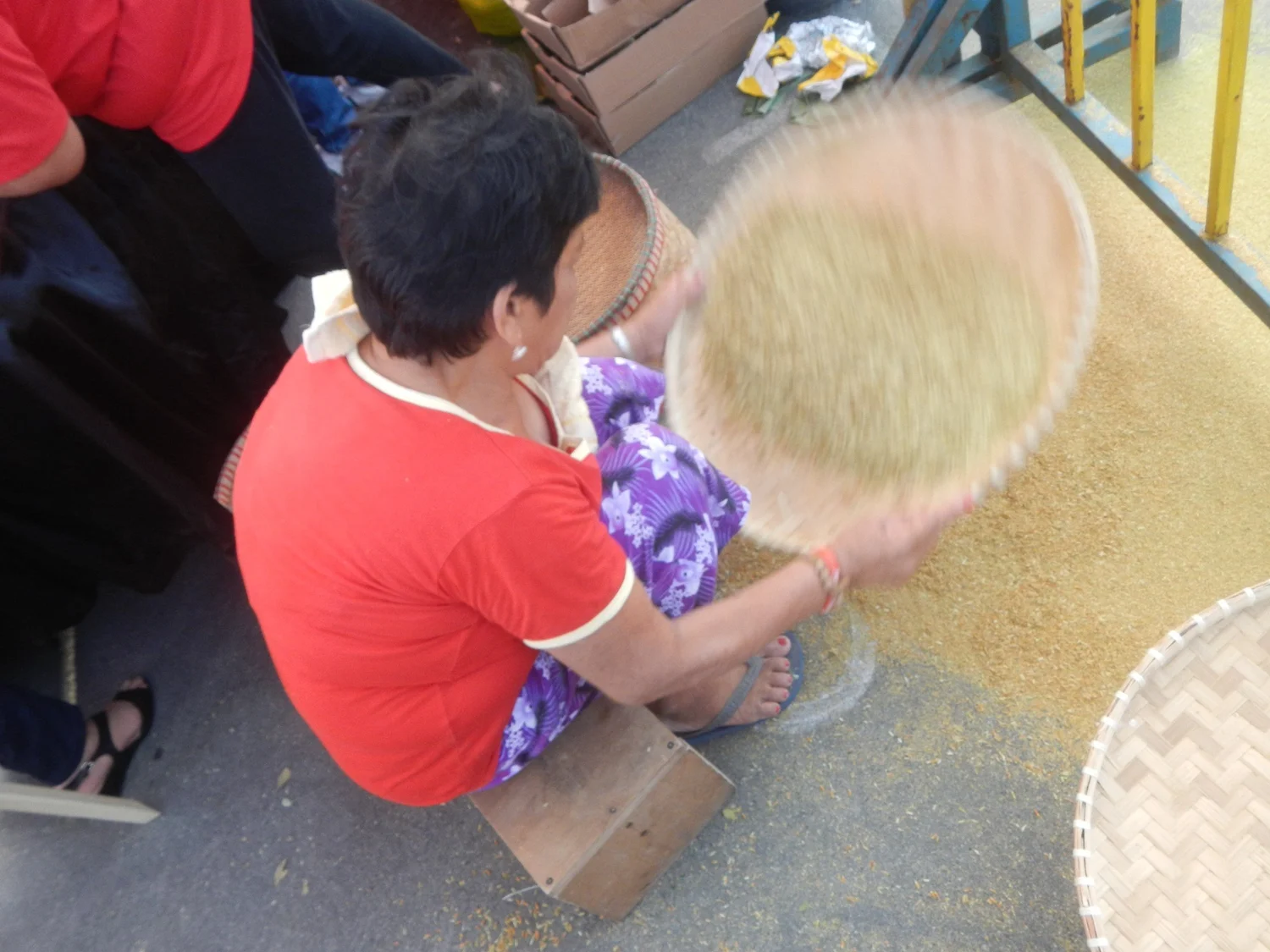
Then comes the tahip, the sieving and winnowing, done again and again and led by women. Apung Senyang David started doing tahip at 21 and is still doing it at 82. Only whole, unbroken grains become duman. Families once measured it in the pati, a wooden box that was also used to pay taxes and set prices.
A full day of processing can run from dawn until midnight, depending on the harvest.
The Families Who Still Make It
Pamagduman passes down through families, and each family's seeds have long been one of its most prized possessions. Five clans once made duman in Central Luzon. Today only two still turn the harvest into duman, the Galang and Cuenca families, both in Barangay Santa Monica in Santa Rita.
In the Cuenca family, the craft has passed through three generations: Maria Cunanan-Pineda, then her daughter Julia, who took up duman-making to add to her husband Oswaldo's farm income and lived to 89, then Julia's son Alvin, who now looks after the family's work area. In the Galang family, the patriarch Victor Galang died in 2022, and Renell Bucud, who married into the family, now leads the work as head magduman.
Rodolfo Simpao, a veteran duman farmer, put it simply to Punto!: "This has been our way of life since childhood."
Why It Nearly Disappeared
For a long time, many more farmers in Santa Rita grew duman. After Mount Pinatubo erupted in 1991, many of them switched to other crops. The rice itself is hard to grow. "Duman grains are incredibly sensitive and difficult to grow," said Bernard Dizon, who runs a palbibewan.
The economics are harder still. Traditional rice varieties are naturally low-yielding, the season is short, and Rappler reported in its look at the craft that family workers earn about Php 500 for two days of work, with most sales only covering what it costs to make. Typhoons can wipe out a year's harvest. Older magduman have also noticed the rice changing, saying it's less fragrant than it used to be.
That's why I couldn't find it. It's made in small amounts, it sells out close to home, and fewer people each year know to look for it.
Who's Bringing It Back
In Santa Rita, people are working to bring it back. Ruston BanalBetis, PampangaRuston BanalKapampangan art historian, visual ethnographer, and culinary historian. He started the UNESCO bid for pamagduman, submitted in 2024, and wrote the 2024 food book Pimamanan. He also documents the Aeta and Sama de Laut communities of Pampanga.Website · Instagram, a visual ethnographer and culinary historian, started a bid to have pamagduman recognized by UNESCO as Intangible Cultural Heritage. The National Commission for Culture and the Arts and the UNESCO National Commission of the Philippines submitted it in 2024. Duman is also being submitted separately for a geographical indication, the kind of protection that ties a food to the place it comes from. Banal also made a documentary, Pamagduman: The Making of the Green Gold, which schools can use in class.
Scientists at PhilRice have purified duman seeds into four variants and are growing them in greenhouses, working to restore true-to-type seed. Advocacy by Bernard Dizon and Alvin Cuenca helped raise the number of farmers growing the rice from four to 24. And Mayor Reynan Calo announced that duman lessons will be added to public school classes.
"Duman-making will not die in Pampanga, especially in Santa Rita," he told the Inquirer.
Young people are starting to learn the craft, too. At last year's festival, the youngest of the dozen men pounding rice was 16-year-old Prince Rizen "Moymoy" Valencia, working on his father Resty's team. "Ba kung mabiasa mu rin pu," he told the Inquirer: so that I can learn duman-making too.
The Duman Festival
Every December, Santa Rita throws a night-long celebration for its green gold. The homegrown theater group ArtiSta.Rita started the Duman Festival in 2002, and this year's festival is in December 2026. It's a night of Kapampangan food, stalls selling duman straight from the families who make it, and an original musical staged by ArtiSta.Rita. In 2025, the 23rd festival returned to the grounds of the Santa Rita de Cascia church, which marks 300 years in 2026.
Buying directly from the farmers, at the festival or from the families in Santa Monica, is one of the most direct ways to help the craft continue.
How to Eat It
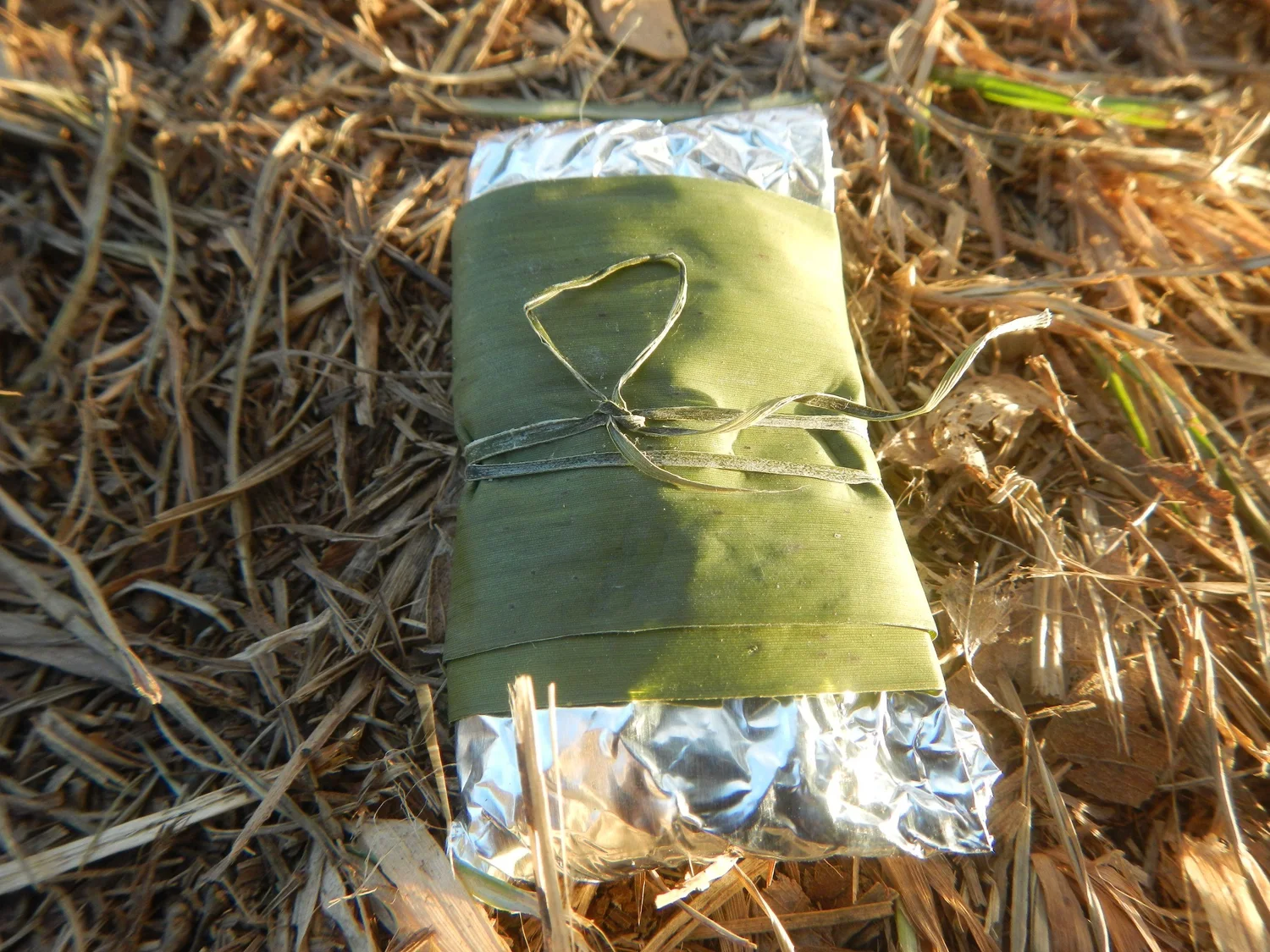
Kapampangans eat duman simply. It's best with fresh carabao's milk poured over it like cereal, or stirred into a cup of hot tsokolate made from tablea. It can be toasted until crisp and sprinkled with sugar, or made into kalame, a rice cake.
Close to Home
Of everything that trip reintroduced me to, the hardest to find was the one grown closest to my family. Duman lasts because a few families in Santa Rita still wake before dawn every November to cut the rice while the wind is cold.
So this week, while many tables fill up, our thanks goes to the magduman of Santa Rita: the farmers who wait for the amihan, the men who pound the rice for hours, the women who winnow it again and again until only whole grains are left, and the 16-year-old who wants to learn how. If you're in Pampanga in December 2026, go to the Duman Festival and buy directly from the families.
Does your family know duman? If you grew up eating it, or if your family made it, we'd love to hear your story. Message us at @diwamag or write to stories@diwamag.co.
DIWA Membership makes this work possible, and Founding Membership closes Monday, November 30. Become A Member.
More from The Loom: Undas: How We Remember the Dead and Tell Me Again.
Get the next story in your inbox.